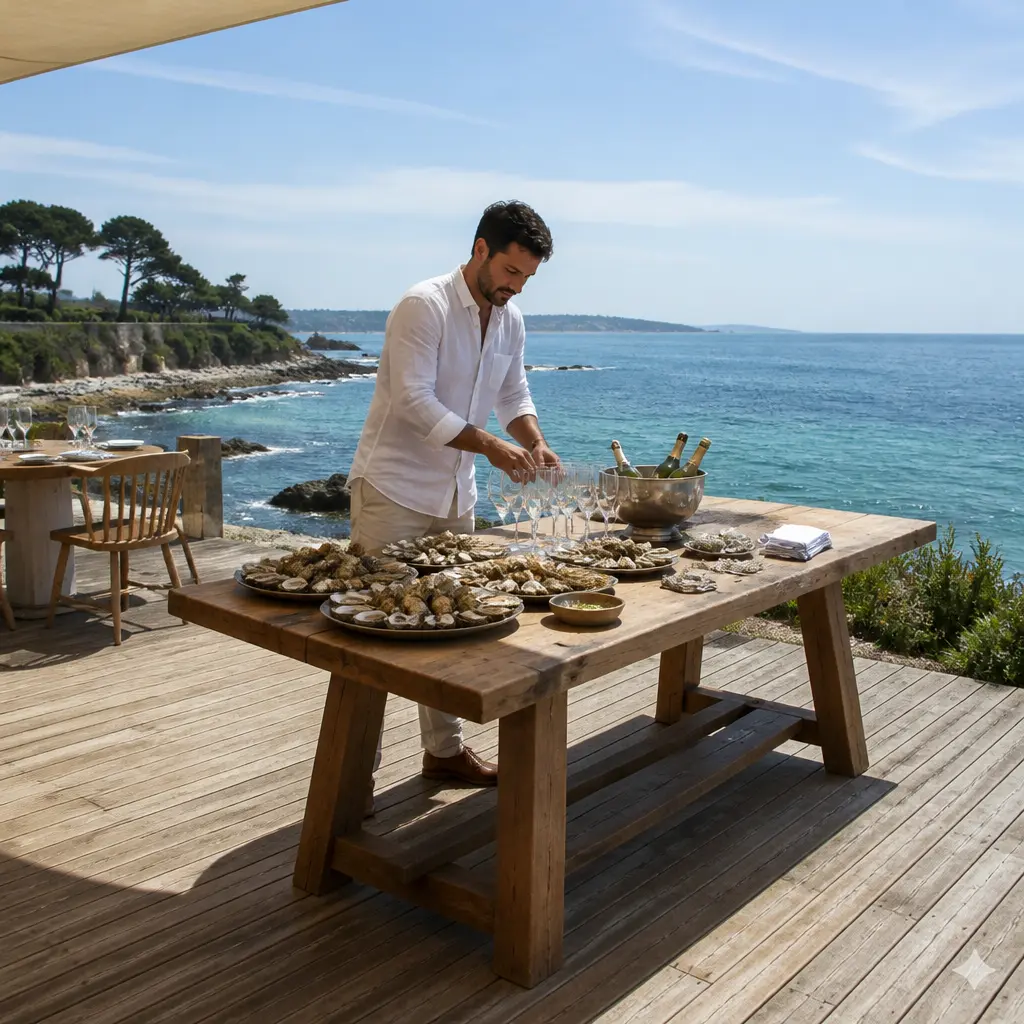
Champagne style–oyster pairing is the deliberate matching of a sparkling wine’s acidity, dosage, texture, and aroma with an oyster’s salinity, brine, sweetness, and mineral character. For oysters that taste flat, overly metallic, or merely average, the most reliable transformation usually comes from high-acid Brut Nature or Extra-Brut Champagne, while Blanc de Blancs adds citrus and chalky lift, and carefully chosen rosé or vintage Champagne supplies greater fruit and texture. The pairing matters because oysters are subtle, low-fat foods: Champagne’s carbonation refreshes the palate, its acidity sharpens perceived freshness, and its savory or mineral notes can make a mediocre shellfish seem more vivid without masking it. The Comité Champagne reported approximately 299 million bottles shipped worldwide in 2023, showing the scale of the category, while NOAA notes that a single oyster can filter substantial volumes of water, helping explain why growing conditions strongly influence flavor.
Champagne Style–Oyster Pairing Defines the Main Attribute
Champagne style–oyster pairing means selecting a Champagne according to the wine’s principal sensory attributes—acidity, dosage, bubbles, grape composition, aging, and texture—and matching them to the oyster’s sensory attributes, including salinity, sweetness, fatness, mineral character, and finish. The Comité Champagne classifies Champagne by features such as grape varieties, production method, maturation, and sweetness level; these attributes create the practical “styles” used at the table.
The key hyponyms are Brut Nature, Extra-Brut, Brut, Blanc de Blancs, Blanc de Noirs, rosé, vintage, and prestige cuvée. Brut Nature and Extra-Brut are generally the driest choices, while Brut allows a broader range of dosage and often feels rounder. Blanc de Blancs is made exclusively from white grapes, principally Chardonnay, whereas Blanc de Noirs is made from black grapes such as Pinot Noir or Meunier. These are not interchangeable labels: they predict different levels of citrus, fruit, body, and savory depth.
The bridge from label to plate is balance. An oyster’s salinity makes a wine seem fruitier and less acidic, while Champagne’s acidity and effervescence remove the lingering impression of brine. The best match therefore depends less on prestige than on whether the wine has enough freshness, enough texture, and the right level of sweetness for the oyster and its preparation.
Brut Nature and Extra-Brut Supply the Sharpest Refreshment
Brut Nature Champagne contains no more than 3 grams of sugar per liter when no sugar is added after disgorgement, according to the Comité Champagne. Extra-Brut contains up to 6 grams per liter. Their defining characteristic is not simply “dryness” but the absence of noticeable sweetness, which leaves acidity, mineral character, and oyster salinity in clear focus.
These styles are particularly effective with oysters that are fresh but watery, bland, or lacking in finish. The wine’s brisk acidity adds structure, while persistent bubbles create contrast against the oyster’s soft texture. A grower Champagne with restrained fruit, a mineral-driven Côte des Blancs Chardonnay, or a lean non-vintage cuvée can make a plain oyster taste more energetic.
The limitation is that very lean Extra-Brut can exaggerate harshness in oysters that are already metallic, thin, or aggressively salty. Serve it cold but not icy—roughly 8 to 10 degrees Celsius—because excessive chilling suppresses aroma and makes acidity feel harder.
Brut Champagne Offers the Safest All-Purpose Match
Brut Champagne contains less than 12 grams of sugar per liter under the Comité Champagne classification. In practical terms, Brut is usually the most versatile oyster partner because its dosage can soften acidity without making the wine taste sweet. It combines freshness with a broader, more forgiving texture.
Choose Brut when the oysters vary in size, origin, and salinity, or when they are served with lemon, mignonette, herbs, or a light vinaigrette. Its moderate dosage can round out a sharp condiment, while its acidity keeps the finish clean. This is often the most effective style for a mixed platter in a restaurant or at home.
The important distinction is between balance and sweetness. A well-made Brut should not taste sugary; it should taste proportionate. WSET teaching materials describe sweetness, acidity, alcohol, tannin, and body as structural components of wine evaluation, and that framework is useful here: acidity should refresh, while dosage should prevent the pairing from becoming austere.
Blanc de Blancs Adds Citrus, Chalk, and Lift
Blanc de Blancs Champagne is produced from white grapes, most commonly Chardonnay. Chardonnay from the Côte des Blancs is frequently associated with citrus, apple, floral notes, chalky minerality, and linear acidity, although climate, producer, and aging can significantly change the profile.
This style is the classic choice for delicate oysters served raw and unadorned. Its lemon, green-apple, and mineral notes echo the oyster’s clean brine without adding heavy fruit. It is especially persuasive when a mediocre oyster needs aromatic definition: the Champagne supplies a clear sensory frame that makes the shellfish seem fresher and more precise.
Blanc de Blancs also works with oysters dressed with lemon or cucumber. However, very acidic lemon juice can make both the oyster and wine seem sharper, so a lightly squeezed oyster is usually preferable to one submerged in citrus.
Blanc de Noirs Brings Body and Savory Contrast
Blanc de Noirs is white Champagne made from black grapes, principally Pinot Noir or Meunier. Compared with many Blanc de Blancs wines, it tends to offer more body, red-apple fruit, spice, and savory breadth, although the exact result depends on pressing, fermentation, aging, and dosage.
This fuller profile helps when oysters are grilled, smoked, bacon-wrapped, or served with browned butter. It can also support large, creamy oysters whose texture would make a very lean wine feel thin. The pairing works through contrast: the oyster contributes salinity and softness, while Blanc de Noirs supplies weight and gently oxidative or savory complexity.
For raw oysters, select a lighter Blanc de Noirs rather than a heavily oaked or highly mature example. Excessive oak, oxidation, or dosage can overpower the shellfish and turn a subtle pairing into a wine tasting with an oyster garnish.
Rosé Champagne Connects Oysters with Fruit and Spice
Rosé Champagne gains its color either through blending a small amount of red wine into white Champagne or through brief skin contact with black grapes. It may show strawberry, raspberry, red-currant, citrus, and spice notes, with a texture ranging from delicate to vinous.
Rosé is most useful when oysters are served with stronger accompaniments such as chili, tomato, beet, smoked paprika, or fruit-based mignonette. The wine’s red-fruit character creates a bridge to those ingredients while its acidity preserves the oyster’s freshness.
With plain oysters, choose a pale, dry rosé rather than a sweet or strongly tannic bottle. Red-wine tannin can clash with shellfish, creating a metallic sensation; low-tannin rosé avoids that problem while adding more flavor than a neutral Brut.
Champagne Acidity and Effervescence Improve Oyster Perception
Acidity is the main structural reason Champagne performs so well with oysters. It counterbalances salinity, stimulates salivation, and prevents the palate from feeling coated by creamy oyster liquor. Carbonation adds a second mechanism: the bubbles create tactile lift and help reset the palate after each bite.
Oysters themselves are low in fat but rich in water, minerals, amino acids, and savory umami compounds. NOAA describes oysters as filter feeders that can process large quantities of water, and that environment influences the shellfish’s salinity and mineral impression. The result is a food whose flavor can vary considerably by estuary, season, growing method, and time since harvest.
Dosage Determines Whether the Pairing Feels Lean or Round
Dosage is the small addition of wine and sugar made after disgorgement. In Champagne, it affects perceived roundness, not merely sweetness. A zero-dosage wine emphasizes oyster brine and acidity, while a Brut with moderate dosage can make a thin oyster feel more generous.
- Choose Brut Nature or Extra-Brut for pristine, sweet-briny oysters served without sauce.
- Choose Brut for mixed platters, lemon, herbs, and mildly creamy oysters.
- Choose a richer Brut or vintage Champagne for grilled, smoked, or butter-based preparations.
- Avoid noticeably sweet Champagne unless the dish includes a deliberately sweet or spicy sauce.
The practical test is simple: if the oyster makes the wine taste sour and skeletal, use a rounder Brut; if the wine makes the oyster taste flat or sugary, use a drier style with higher acidity.
Autolytic Texture Adds Bread, Cream, and Length
Champagne’s traditional-method production and lees aging can create notes of brioche, toast, pastry, and cream. Extended aging also tends to increase texture and complexity. The Comité Champagne requires non-vintage Champagne to mature for at least 15 months and vintage Champagne for at least 36 months, although many producers age their wines considerably longer.
These autolytic qualities are useful when the oyster is rich, meaty, or cooked. A mature vintage Champagne can give a grilled oyster enough depth to stand beside char, garlic, or butter. For a small, delicate raw oyster, however, an intensely mature prestige cuvée may be too powerful and may conceal the shellfish’s natural finish.
Champagne Oyster Pairings Work Best by Preparation
Raw Oysters Favor Blanc de Blancs and Lean Brut
Raw oysters served on ice are best matched with Champagne that is high in acidity and moderate in flavor intensity. Blanc de Blancs, Extra-Brut, and mineral-driven Brut are reliable choices because they sharpen the oyster without introducing heavy fruit or oak.
For a mediocre raw oyster, use a chilled Blanc de Blancs with citrus and chalk notes, a squeeze of lemon no larger than needed, and a small amount of Champagne-friendly mignonette. The wine cannot restore freshness to an unsafe or spoiled oyster, but it can add contrast to a bland one.
Grilled and Baked Oysters Favor Blanc de Noirs or Vintage Brut
Heat concentrates oyster flavor and introduces caramelization, smoke, and browned fat. These changes call for more body than a very lean Extra-Brut normally provides. Blanc de Noirs, richer Brut, and mature vintage Champagne can match the extra intensity.
A useful real-world format is a baked oyster with breadcrumbs, herbs, and a small amount of butter paired with Pinot Noir-dominant Champagne. The wine’s broader texture mirrors the topping, while acidity prevents the dish from becoming heavy.
Spicy and Sauced Oysters Favor Dry Rosé or Round Brut
Chili, fermented sauces, fruit, and vinegar change the pairing more than the oyster itself. Dry rosé Champagne can echo fruit and spice, while a round Brut cushions acidity and heat. Extra-Brut may taste excessively sharp beside a very sour mignonette or hot sauce.
Serve the wine in white-wine glasses rather than narrow flutes when possible. A broader bowl exposes more aroma and lets the drinker perceive citrus, fruit, toast, and mineral notes that would otherwise be hidden by cold temperature and restricted glass shape.
Champagne Selection Protects Quality and Food Safety
No wine can make an unsafe oyster safe. The U.S. Food and Drug Administration warns that raw or undercooked shellfish can carry pathogens, including Vibrio, and recommends purchasing shellfish from approved sources and keeping it properly chilled. Champagne should be treated as a flavor pairing, never as a food-safety measure.
- Buy oysters from a reputable supplier and retain harvest tags where required.
- Keep live oysters cold, concave side down, and never submerged in fresh water.
- Discard oysters with broken shells, unpleasant odors, or shells that remain open after tapping.
- Match Champagne intensity to preparation: lean for raw, broader for cooked, and fruitier for spicy sauces.
- Taste one oyster before opening an expensive bottle; the oyster’s salinity should guide the final choice.
Champagne Style–Oyster Pairing Offers a Practical Tasting Method
A simple tasting experiment can demonstrate the effect of style more clearly than a fixed “best bottle” list. Place one oyster beside three small pours: Extra-Brut, standard Brut, and Blanc de Blancs. Taste the oyster alone, then with each wine, recording whether the finish becomes fresher, sweeter, more metallic, or more persistent.
Figure 1 can be presented as a four-axis pairing chart with dryness, acidity, body, and fruit intensity on the horizontal axis and oyster preparation on the vertical axis. The expected pattern is lean Extra-Brut for raw oysters, medium-bodied Brut for mixed platters, Blanc de Blancs for delicate oysters, and Blanc de Noirs or vintage Champagne for cooked preparations.
This method also reveals why producer matters. Two Champagnes with the same legal sweetness category can taste very different because of grape blend, vineyard, reserve-wine proportion, fermentation vessel, lees aging, disgorgement date, and serving temperature. The most memorable pairing is therefore built from sensory comparison rather than label prestige alone.
Champagne Styles Transform Mediocre Oysters Through Contrast
The strongest choices are Extra-Brut or Brut Nature for clean, unadorned oysters; Blanc de Blancs for citrus, chalk, and precision; Brut for broad versatility; Blanc de Noirs for body and savory depth; rosé for spice and fruit; and mature vintage Champagne for grilled or richly dressed oysters. Each style changes the perception of the shellfish through acidity, bubbles, dosage, texture, and aroma.
The broader lesson is that pairing should diagnose rather than disguise. Champagne can make an ordinary oyster seem brighter and more complete, but freshness, provenance, handling, and safety remain fundamental. Begin with a reliable Brut or Blanc de Blancs, compare it with a drier Extra-Brut, and then explore Blanc de Noirs or rosé as the preparation becomes richer. Further reading from the Comité Champagne, WSET, NOAA, and the FDA can deepen both wine knowledge and responsible shellfish practice.
Sources: Comité Champagne, Champagne Classification and Production, https://www.champagne.fr/en/; Comité Champagne, Champagne Shipments and Statistics, https://www.champagne.fr/en/economy/figures; Wine & Spirit Education Trust, Systematic Approach to Tasting Wine, https://www.wsetglobal.com/knowledge-centre/wset-systematic-approach-to-tasting-sat/; National Oceanic and Atmospheric Administration, Oysters and Shellfish Ecosystems, https://oceanservice.noaa.gov/education/tutorial_estuaries/est7.html; U.S. Food and Drug Administration, Raw or Undercooked Oysters and Vibrio, https://www.fda.gov/consumers/consumer-updates/what-you-need-know-about-vibrio-and-oysters; U.S. Department of Agriculture, FoodData Central, Oysters, https://fdc.nal.usda.gov/