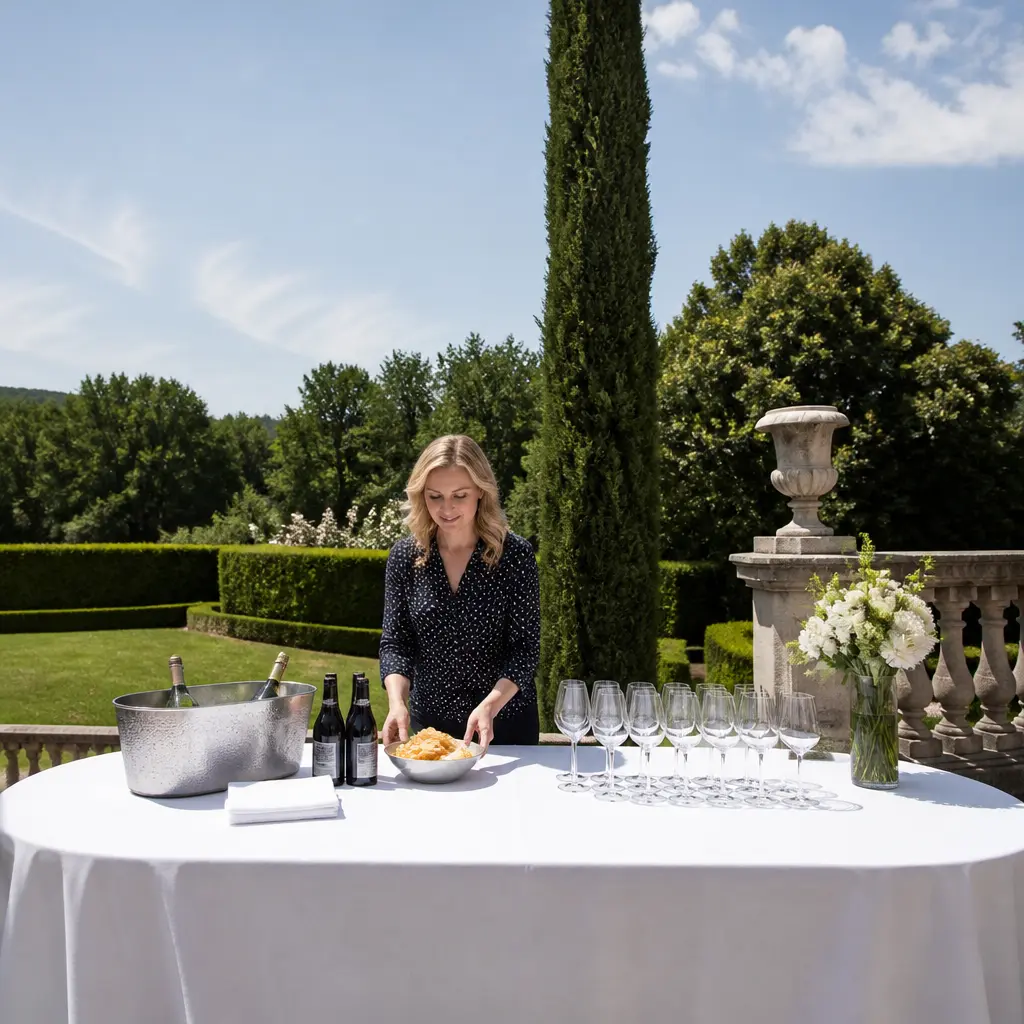
Potato chips as a sparkling-wine pairing are the surprising “garnish” many sommeliers recommend for bubbly: their salt, crunch, and fried richness make Champagne and other sparkling wines taste brighter and more refreshing. Strictly speaking, a chip is an accompaniment rather than a garnish, but the pairing captures an important rule of wine service—high-acid, carbonated wines can balance fatty and salty foods exceptionally well. The combination also connects classic Champagne principles, sensory science, serving temperature, and the growing popularity of informal luxury. Champagne shipments reached about 299 million bottles worldwide in 2023, according to the Comité Champagne, making practical, accessible pairing ideas relevant far beyond formal tasting rooms.
Potato Chips as a Sparkling-Wine Pairing Attribute
The entity-attribute pairing here is “potato chips as a sparkling-wine pairing”: the food entity is a thin, fried potato slice, while the attribute describes its role beside Champagne, Prosecco, Cava, Crémant, or another bubbly wine. Wine educators generally define successful pairing through balance rather than prestige. WSET explains that a pairing works when the food and wine complement or contrast with one another in intensity, weight, flavor, and structure. Potato chips succeed because their salt and fat meet the wine’s acidity and effervescence in a direct sensory contrast.
Salt and acidity create the first contrast
Salt can make a wine seem fruitier and less bitter, while acidity refreshes the palate after a fatty bite. A classic Brut Champagne usually has enough acidity to cut through the oil left by fried food, and its bubbles provide additional lift. The result is a repeating cycle: crisp chip, creamy or citrusy sip, then a clean finish that encourages another bite.
This is why sommeliers often favor plain salted chips over heavily seasoned versions. The simpler chip highlights the wine’s texture instead of competing with it. A practical text-only pairing chart would rank plain salted chips as the most versatile, kettle-cooked chips as richer and more textural, and flavored chips as the most demanding because onion, barbecue, chili, or vinegar can dominate delicate sparkling wines.
Crunch mirrors the wine’s bubbles
Texture is as important as flavor. A potato chip breaks sharply, while carbon dioxide creates a prickling sensation across the tongue. These two forms of crispness make the pairing feel energetic. The effect is strongest when the wine is served properly chilled—roughly 7 to 10 degrees Celsius for many young sparkling wines—and the chips are fresh enough to retain their snap.
Decanter’s food-and-wine pairing guidance has repeatedly presented crisps, or potato chips, as an unexpectedly effective match for Champagne. The recommendation is not that every sparkling wine tastes identical with every chip. Rather, it demonstrates how textural similarity and structural contrast can be more persuasive than matching luxury with luxury.
Sommeliers Pair Bubbly with Fat, Salt, and Crunch
Sommeliers use potato chips as a gateway to a broader family of sparkling-wine pairings. The same logic applies to fried chicken, tempura, potato rösti, fried oysters, popcorn, caviar, and buttery pastries. These foods share at least one quality—fat, salt, crispness, or richness—that sparkling wine can moderate.
Plain salted chips are the benchmark
Plain salted chips are the benchmark because they contain few aromatic ingredients. Their main variables are salt, oil, potato flavor, and crunch. Brut Champagne, Brut Nature, and dry Cava work particularly well when the wine has enough fruit and acidity to avoid seeming austere. A traditional-method wine with noticeable yeast-derived bread or biscuit notes can also echo the toasted flavor of a fried chip.
The best serving approach is deliberately uncomplicated: pour a dry, cold sparkling wine into a flute or white-wine glass, open a fresh bag of lightly salted chips, and taste them together. A wider tulip-shaped glass may reveal more aroma, while a flute emphasizes the visual persistence of the bubbles. In either case, a small serving prevents the oil and salt from overwhelming the palate.
Caviar and crème fraîche intensify the luxury version
Caviar served on a potato chip is a more elaborate hyponym of the same pairing: potato chips with caviar and sparkling wine. The chip supplies crunch and salt, crème fraîche contributes cool richness, and caviar adds marine salinity. Champagne’s acidity keeps the bite from feeling heavy. This version is associated with restaurants and cocktail parties, but the underlying structure is identical to the everyday chip pairing.
The combination also explains why sommeliers frequently recommend potato chips alongside oysters or smoked salmon. The wine’s acidity and bubbles refresh the palate, while the food’s saline character reinforces the wine’s mineral impression. The match is strongest with wines that are dry but not aggressively tannic; tannin can taste harsh beside salt and delicate seafood.
Flavored chips require a more specific wine
Flavored chips are not forbidden, but they narrow the pairing. Vinegar chips need a sparkling wine with lively acidity, such as Brut Champagne or high-acid Cava. Chili chips can work with a slightly fruitier, lower-alcohol sparkling wine because alcohol intensifies the perception of heat. Truffle, cheese, or sour-cream flavors are better with fuller traditional-method wines that have enough body to meet their savory intensity.
Very sweet or strongly oaked sparkling wines may be less successful with plain chips. Excess sweetness can make salt seem sharper, while heavy oak can clash with the clean, delicate flavor of potato. The pairing principle is therefore not simply “bubbles go with chips”; it is “fresh, dry, high-acid bubbles balance simple fried and salty foods.”
Sparkling-Wine Pairing Science Supports the Surprise
Effervescence resets the palate
Carbonation contributes both physical stimulation and perceived freshness. Bubbles do not literally scrub fat from the mouth, but they increase salivation and create a lively sensation that makes rich foods feel less monotonous. Acidity performs the more important balancing work, especially in Champagne and other wines made from grapes such as Chardonnay, Pinot Noir, and Pinot Meunier.
The Comité Champagne describes acidity, dosage, aroma, and effervescence as central elements in tasting Champagne. That framework explains why a dry sparkling wine can handle fried foods more successfully than a still white wine with comparable fruit character: the sparkling wine brings both acidity and carbonation to the encounter.
Dosage changes the final result
Dosage is the small amount of sugar added after disgorgement in traditional-method sparkling wine. Brut wines contain no more than 12 grams of sugar per liter under Champagne’s classification, while Extra Brut and Brut Nature are drier categories. A Brut wine is often the safest choice for potato chips because it retains enough fruit and roundness to balance salt without becoming noticeably sweet.
For a very salty chip, an extremely dry Brut Nature may taste lean or sharp. Conversely, a Demi-Sec sparkling wine can seem cloying unless the food contains heat or a strongly sweet-savory element. This is a useful example of why sommeliers evaluate the whole dish rather than relying on a single category such as “fried food.”
How to Serve the Potato-Chip and Bubbly Pairing
A successful tasting requires modest portions and attention to temperature. Serve the wine cold but not icy, use fresh chips, and taste the wine before and after the food. Notice whether the chip makes the wine seem fruitier, sharper, creamier, or more mineral. This simple comparison is more informative than treating the pairing as a novelty.
- Choose plain salted chips for Champagne, Cava, Crémant, or dry Prosecco.
- Choose kettle-cooked chips when pairing with a fuller, richer traditional-method wine.
- Use vinegar chips with high-acid sparkling wine and chili chips with fruitier, lower-alcohol bubbly.
- Avoid serving stale chips or pouring a highly delicate wine beside intensely flavored seasonings.
The idea also has a useful hospitality lesson. A sommelier does not need an expensive ingredient to demonstrate technical knowledge. A low-cost snack can reveal how salt, fat, texture, acidity, sugar, alcohol, and carbonation interact. That makes potato chips an accessible training tool for restaurants, wine shops, and home tastings.
Conclusion: Potato Chips Make Bubbly More Approachable
Potato chips as a sparkling-wine pairing work because salt and fried richness are balanced by acidity, while the chip’s crunch echoes the wine’s energetic bubbles. Plain salted chips are the most flexible choice; caviar-topped chips offer a luxury variation; and strongly flavored chips require more careful matching. The pairing also demonstrates the broader sommelier method: assess structure and texture before judging a food by its price or formality.
For a practical next step, compare one plain chip with Brut Champagne, dry Cava, and Prosecco, then repeat the tasting with a vinegar or chili chip. Record how the salt, acidity, sweetness, aroma, and texture change. Further reading from the Comité Champagne, WSET, and specialist wine publications can deepen that experiment—and may permanently change how you think about opening bubbly with a simple snack.
Sources: Comité Champagne, Champagne shipments and industry information, https://www.champagne.fr/en/economy/champagne-wine-shipping; Comité Champagne, How to taste Champagne, https://www.champagne.fr/en/champagne-tasting/how-to-taste-champagne; Decanter, Wine and food pairing: Champagne and crisps, https://www.decanter.com/learn/food-and-wine-pairing-champagne-and-crisps-ask-decanter-351821/; WSET, Food and wine pairing, https://www.wsetglobal.com/knowledge-centre/wine-food-pairing/; Food & Wine, Champagne and potato chips, https://www.foodandwine.com/champagne-and-potato-chips-7096931