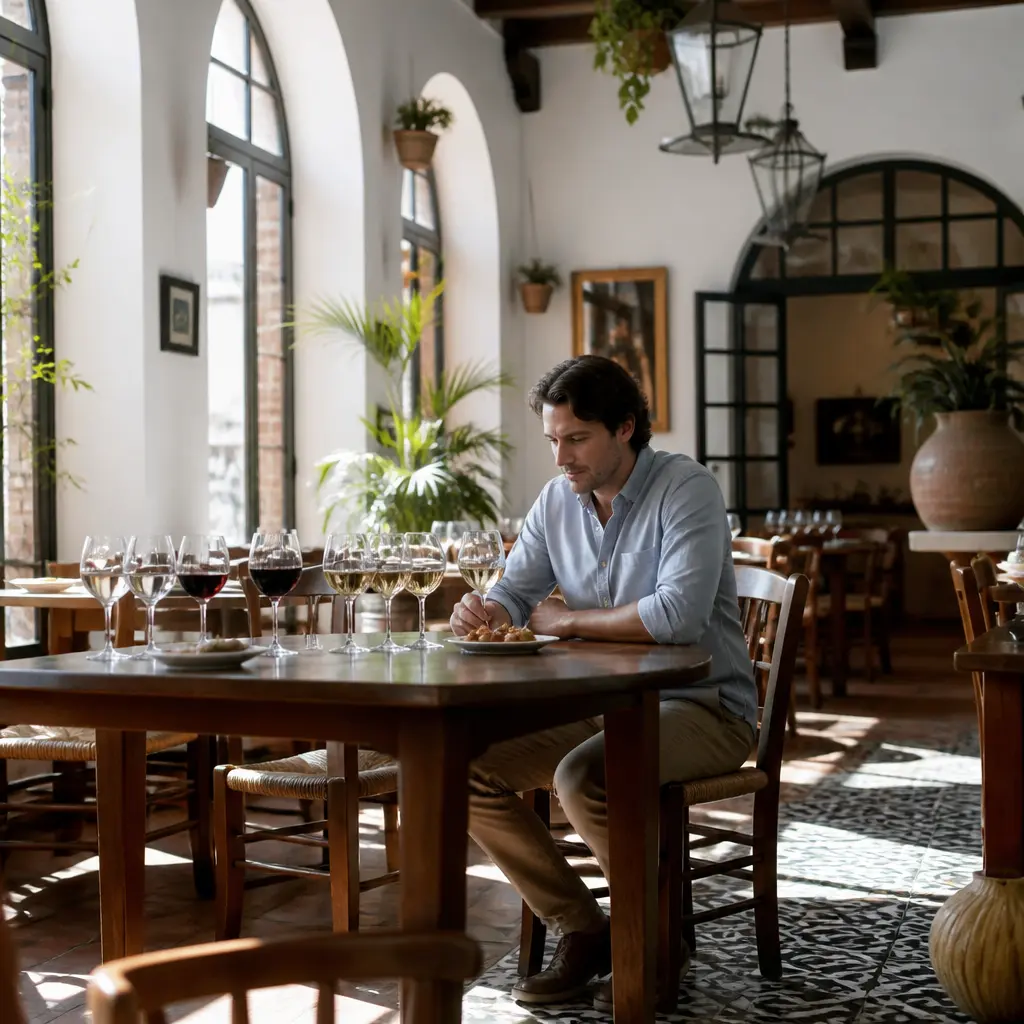
Tapas–wine pairing rules become practical once the main entity is understood: tapas are small Spanish dishes designed to be shared, while wine pairing is the deliberate matching of a wine’s structure and flavor with a food’s dominant ingredients. The most reliable method is to identify salt, acidity, sweetness, spice, fat, umami, and serving temperature before choosing a wine. WSET’s Systematic Approach to Tasting Wine evaluates comparable factors—including sweetness, acidity, tannin, alcohol, body, and flavor intensity—giving diners a useful framework for matching everything from anchovies and olives to croquetas, grilled seafood, and jamón.
Tapas–Wine Pairing Rules Define the Core Attribute Pairing
The entity–attribute pairing in this subject is tapas as the entity and wine-pairing rules as its attribute. It can be defined as a set of sensory guidelines for matching a small Spanish dish with a wine whose sweetness, acidity, body, alcohol, tannin, aroma, and texture either complement or balance the food. Wine educator Karen MacNeil presents food-and-wine matching as a balance between the weight and intensity of the dish and those of the wine, while the Oxford Companion to Wine emphasizes that successful pairing depends on both ingredients and preparation.
The most useful hyponyms—more specific forms of the general pairing rule—are contrast pairing, complement pairing, regional pairing, texture pairing, intensity matching, and progression pairing. These categories overlap: a crisp Albariño may complement a seafood tapa through shared freshness, contrast fried batter through acidity, and reinforce a Galician theme through regional identity.
Intensity matching
Intensity matching means pairing a delicate tapa with a lighter wine and a strongly seasoned or richly textured tapa with a fuller wine. A fresh tomato pan con tomate can be overwhelmed by a heavily oaked red, whereas a medium-bodied Cava, Verdejo, or light red maintains the dish’s freshness. Conversely, beef cheeks, morcilla, or paprika-rich stews need a wine with enough body and flavor concentration to remain noticeable.
WSET’s tasting framework is useful here because body is assessed alongside alcohol, extract, acidity, and tannin rather than treated as a vague impression. A practical test is to ask whether the food or wine disappears first. If the wine vanishes, select more body or concentration; if the wine dominates, move toward lower alcohol, less oak, or brighter acidity.
Contrast and complement
Contrast pairing uses an opposing sensation to create balance. High-acid wines cut through oil in fried boquerones, croquetas, and patatas bravas, while sparkling wine lifts the palate through carbonation. Complement pairing repeats or supports a flavor already present: a nutty, oxidative fino Sherry can echo toasted almonds, cured ham, or aged cheese, and a fruity rosé can reinforce the sweetness of roasted peppers.
The distinction matters because not every matching flavor improves a dish. Excessive sweetness beside a savory tapa can make the wine taste cloying, while a very tannic red beside salty fish may taste metallic or harsh. The governing principle is balance, not a requirement that every flavor be identical.
Tapas–Wine Pairing Rules Connect Food Attributes to Wine Structure
After intensity is estimated, the next predicate is ingredient interaction: how a tapa’s dominant attributes change the perception of a wine. Salt, acid, fat, sweetness, chili heat, umami, and smoke can alter perceived bitterness, dryness, fruitiness, and alcohol. This is why the same red wine may taste smooth with grilled meat but austere with anchovies.
Salt, acidity, and seafood
Salt generally makes wine seem fruitier and less bitter, but very salty foods can magnify alcohol and make a wine feel dry. High-acid whites are therefore dependable with conservas, boquerones, gambas, pulpo, and other seafood tapas. Albariño, Txakoli, Cava, and dry Manzanilla offer combinations of acidity, freshness, or saline character that keep the palate lively.
For seafood with lemon, vinegar, or pickled garnish, the wine should usually be at least as acidic as the dish. If the food is more acidic than the wine, the wine can taste flat. This rule explains why crisp whites and sparkling wines are safer choices than soft, low-acid reds for escabeche or vinegar-dressed tapas.
Fat, frying, and creamy textures
Fat and fried coatings benefit from acidity, bubbles, or tannin because these attributes refresh the mouth and prevent the dish from feeling heavy. Cava works particularly well with croquetas, calamari, fried peppers, and battered vegetables. A young Rioja or Mencía can also suit fried mushrooms or meat when the dish has enough savory depth to support moderate tannin.
Creamy tapas require a different balance. A wine with lively acidity can cut through béchamel or soft cheese, while excessive oak can make the combination taste bulky. The serving temperature is also a measurable part of the pairing: sparkling wine and most whites are commonly served chilled, whereas structured reds are served cool rather than warm, helping alcohol remain integrated.
Spice, sweetness, and umami
Chili heat makes alcohol feel hotter and can intensify bitterness, so high-alcohol, tannic reds are risky with spicy patatas bravas or pimentón-heavy dishes. Dry or off-dry whites, sparkling wines, and lower-alcohol rosés are often more forgiving. A touch of sweetness can soften chili, but the wine should not be so sweet that it overwhelms a savory tapa.
Umami-rich ingredients such as mushrooms, cured ham, anchovies, soy-based sauces, and aged cheese can make tannin and bitterness seem more pronounced. This finding is consistent with sensory research summarized by WSET and food-science educators: umami can reduce perceived fruitiness and increase the impression of astringency. Choose wines with moderate tannin, strong freshness, or oxidative complexity rather than very young, aggressively structured reds.
Tapas–Wine Pairing Rules Organize Common Wine Categories
A practical pairing list should begin with wine style rather than a long catalog of individual bottles. Spain’s regional diversity makes this approach especially useful: the country’s wines include sparkling Cava, crisp Atlantic whites, aromatic varieties, dry Sherry, rosé, light reds, and powerful Mediterranean reds. The following categories offer a compact decision guide.
- Sparkling wine: choose Cava for fried foods, creamy croquetas, salty snacks, and mixed platters because acidity and carbonation refresh the palate.
- Crisp white wine: choose Albariño, Txakoli, Verdejo, or a similarly fresh white for seafood, green vegetables, herbs, citrus, and pickled ingredients.
- Dry Sherry: choose Fino or Manzanilla for olives, almonds, jamón, fried seafood, and salty snacks; choose Amontillado or Oloroso when the tapa is nuttier, richer, or meatier.
- Rosé or light red: choose these for tomato-based tapas, grilled vegetables, tuna, sausage, and mixed boards where a white may feel too delicate and a full red too heavy.
- Medium-bodied red: choose young Rioja, Garnacha, or Mencía for lamb, beef, chorizo, mushrooms, and smoky grilled foods, adjusting for chili and salt.
- Sweet wine: reserve it for clearly sweet tapas or desserts, blue cheese, and very spicy food; sweetness should be perceptible in the wine but not necessarily dominant.
Tapas–Wine Pairing Rules Improve the Shared-Meal Sequence
Tapas are rarely eaten as a single course, so progression pairing is as important as the match with an individual plate. Start with lighter wines and delicate foods, move toward richer or more intensely seasoned tapas, and finish with sweet wine only when dessert arrives. This sequence protects the palate and prevents a powerful red or sweet wine from making later delicate dishes seem thin.
A useful restaurant or home-tasting chart would place acidity, body, tannin, sweetness, and serving temperature on the horizontal axis, with tapas categories—seafood, fried foods, cured meats, vegetables, grilled meats, and dessert—on the vertical axis. Such a chart should be treated as a guide rather than a rulebook because cooking method, garnish, sauce, and personal preference can change the best match.
A practical five-step method
- Identify the dominant feature: salt, acid, fat, sweetness, chili, umami, smoke, or richness.
- Estimate intensity and body rather than relying only on the main ingredient.
- Choose contrast when the dish is fatty, salty, or rich; choose complement when its flavor profile is delicate or aromatic.
- Check the risky variables: high alcohol with chili, heavy tannin with umami, and low-acid wine with acidic food.
- Taste a small bite and sip, then adjust the wine, garnish, or serving order if the balance is poor.
Conclusion: Tapas–Wine Pairing Rules Turn Choice into Judgment
Tapas are flexible, but their wine matches become easier when the relevant attributes are separated. Intensity matching prevents delicate dishes from being overwhelmed; contrast and complement explain why acidity, bubbles, and regional flavors work; ingredient interaction accounts for the effects of salt, fat, spice, and umami; and progression pairing keeps a shared meal coherent. Begin with the dish’s strongest sensation, compare it with the wine’s acidity, sweetness, body, tannin, alcohol, and texture, and then taste rather than relying on rigid lists. For further exploration, compare one tapa with a sparkling wine, a crisp white, a dry Sherry, and a light red to see how structure changes the experience.
Sources: WSET, Systematic Approach to Tasting Wine, https://www.wsetglobal.com/knowledge-centre/wset-systematic-approach-to-tasting-sat/; Karen MacNeil, The Wine Bible, https://www.karenmacneil.com/the-wine-bible/; Jancis Robinson, The Oxford Companion to Wine, https://www.jancisrobinson.com/ocw; Consejo Regulador del Cava, Cava and Gastronomy, https://www.cava.wine/en/gastronomy/; Consejo Regulador de las Denominaciones de Origen Jerez-Xérès-Sherry, Sherry Wines and Gastronomy, https://www.sherry.wine/en/gastronomy