Storage protection begins before a new purchase is put away: the first decisions about where and how an item is stored can affect its condition, safety, and useful life. “Storage hacks” means practical steps that reduce exposure to moisture, heat, pests, impact, and disorganization. The U.S. Environmental Protection Agency (EPA) recommends controlling moisture to prevent mold, while the National Fire Protection Association (NFPA) emphasizes keeping combustible materials away from heat sources. Together, those principles support a simple arrival routine: inspect and document the item, choose a suitable environment, use protective packaging, organize it for safe access, and check it periodically.
Storage protection preserves an investment from arrival onward
A storage plan is a set of choices about location, environmental conditions, packaging, handling, and monitoring. The best plan depends on the item: electronics, furniture, collectibles, tools, documents, and seasonal equipment have different vulnerabilities. The shared goal is to limit avoidable deterioration without creating new risks, such as trapped moisture, overloaded shelving, or blocked exits.
The scale of the problem is tangible. The Insurance Information Institute reports that flooding can occur outside high-risk flood areas, and that just one inch of water can cause significant damage to a home. Meanwhile, the EPA identifies excess moisture as a key condition for mold growth. These facts make storage location and moisture control important even when an item seems safely tucked away.
Arrival inspections establish a storage baseline
An arrival inspection is a documented check of an item’s condition, packaging, accessories, and identifying details before it enters long-term storage. It establishes evidence of the item’s starting condition and can help distinguish pre-existing damage from later problems.
Photographs and inventory records
Photograph the item from several angles, including labels, serial numbers, existing marks, and included accessories. Record the purchase date, model, warranty information, and storage location in an inventory. For high-value items, retain receipts and condition reports separately from the stored object. This is useful for insurance documentation, warranty claims, maintenance, and locating the item without repeatedly moving boxes.
Packaging checks and safe unpacking
Inspect the outer carton for crushing, punctures, dampness, or signs of pests. Follow the manufacturer’s instructions before removing transit braces, protective films, or moisture-control materials. Keep original packaging when it is designed for future transport, but do not assume sealed packaging is automatically suitable for long-term storage: some materials can trap moisture or place pressure on delicate surfaces.
Once the condition is recorded, the next step is matching the storage environment to the item’s sensitivities. A tidy inventory cannot protect an object from a damp basement or excessive heat.
Environmental control reduces storage damage
Environmental control means managing temperature, humidity, light, air movement, and water exposure so that stored goods remain within appropriate conditions. There is no single ideal setting for every possession; manufacturer guidance and material type should determine the target.
Moisture and humidity management
Moisture can corrode metal, warp wood, damage paper, and encourage mold. The EPA advises drying wet materials within 24–48 hours when possible to help prevent mold growth. Keep valuable belongings off floors, avoid storing them against damp exterior walls, and investigate leaks or musty odors promptly. Use a hygrometer to monitor indoor relative humidity; where humidity is persistently high, a properly sized dehumidifier and good drainage may help. Desiccants can support protection in a closed container, but they are not a substitute for fixing a leak or controlling room humidity.
Temperature, sunlight, and ventilation
Heat and rapid temperature swings may stress plastics, adhesives, batteries, finishes, and electronics. Direct sunlight can fade textiles and artwork and warm enclosed containers. Choose a stable, shaded area, and follow product-specific storage instructions—especially for batteries, chemicals, and equipment with fluids. Avoid placing belongings beside furnaces, water heaters, or other heat sources. For items that need airflow, use breathable covers rather than tightly wrapping them in plastic.
Flood and leak precautions
Flood-aware storage places vulnerable goods on raised shelving and avoids low points where water collects. The Insurance Information Institute notes that flooding is not limited to designated high-risk areas, so a garage, basement, or ground-floor closet should not be treated as inherently safe. Store irreplaceable documents and small valuables in appropriate waterproof containers, while remembering that containers must be suitable for the item and checked for trapped condensation.
A stable room is only part of the solution. The materials touching an item, and the way it is positioned, can either reinforce protection or create new damage.
Protective packaging and placement prevent physical damage
Protective packaging is the barrier between an object and dust, abrasion, pressure, and accidental impact. Good packaging supports the item without compressing fragile components or sealing in harmful moisture.
Choose materials that suit the stored item
Use clean, dry, non-abrasive materials. For textiles, breathable fabric covers can reduce dust while allowing air exchange. For paper and photographs, archival-quality sleeves or folders are preferable to unknown plastics; the Library of Congress recommends appropriate preservation materials and a cool, stable environment for collections. For electronics, retain manufacturer packaging when practical, remove accessories that could press against screens, and follow instructions for batteries and storage temperature. Avoid newspaper in contact with delicate surfaces because ink can transfer.
Support furniture, fragile goods, and heavy items
Store furniture in a way that supports its structure, protects corners, and prevents pressure on delicate legs or upholstery. Use padding between surfaces to prevent scratching, but do not wrap damp furniture tightly. Pack dishes and glass vertically where appropriate, cushion empty spaces, and label boxes with handling directions. Place heavier containers on lower shelves and lighter, fragile items above them. The National Institute for Occupational Safety and Health (NIOSH) highlights that lifting and moving loads can create musculoskeletal hazards; smaller loads, stable handholds, and mechanical aids can reduce strain during storage and retrieval.
Keep storage safe and accessible
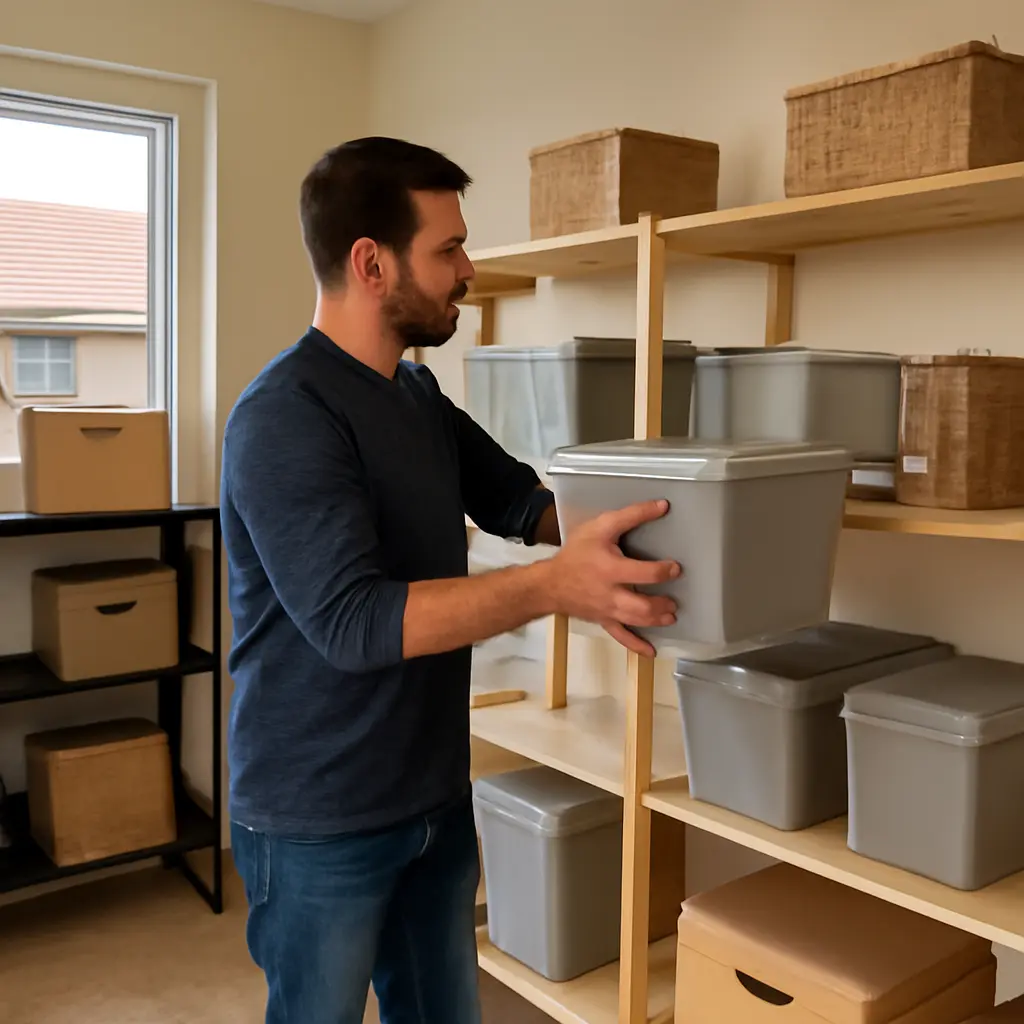
Shelving should be stable, rated for its intended load, and positioned so it cannot tip or obstruct doors, electrical panels, or walkways. Leave access to frequently used items rather than stacking everything into a single unstable pile. The NFPA advises keeping combustible materials away from heat-producing equipment; in practice, maintain clear space around heaters and other ignition sources, and never store flammable liquids near them. A simple aisle and labeled zones make inspections easier and reduce unnecessary handling.
A maintenance routine keeps protection effective
Storage maintenance is the periodic inspection and adjustment of conditions, containers, and placement. A one-time setup can fail if a roof begins leaking, a dehumidifier stops working, or pests find an entry point.
Use a simple inspection schedule
Check stored goods after severe weather, plumbing work, or changes in heating and cooling, and schedule routine reviews at intervals appropriate to the item and location. Look for condensation, odor, discoloration, corrosion, pest activity, damaged packaging, and shelf movement. Update the inventory when an item is moved, serviced, or removed from storage.
Make labels and access part of the plan
Label boxes on more than one side with contents, handling notes, and a unique inventory number. Keep a digital list or map of storage zones, but avoid placing sensitive personal information in a visible label. When an item is needed, retrieve it without dragging or twisting the container; inspect it before returning it so that damage or moisture is not sealed away unnoticed.
Conclusion: protect the purchase before storage becomes a problem
Arrival inspections create a reliable condition baseline; environmental control limits moisture, heat, sunlight, and flood exposure; suitable packaging and placement prevent impact and handling damage; and regular maintenance catches problems early. These storage hacks are small, practical steps that help protect financial and sentimental value alike. Start by documenting the item, reading its care instructions, and choosing a dry, stable, accessible location. Then add the right packaging and a recurring inspection reminder before putting it away.
Sources: U.S. Environmental Protection Agency, A Brief Guide to Mold, Moisture and Your Home, https://www.epa.gov/mold/brief-guide-mold-moisture-and-your-home; Insurance Information Institute, Facts + Statistics: Flood Insurance, https://www.iii.org/fact-statistic/facts-statistics-flood-insurance; National Fire Protection Association, Heating Safety, https://www.nfpa.org/education-and-research/home-fire-safety/heating; Library of Congress, Care, Handling, and Storage of Works on Paper, https://www.loc.gov/preservation/care/paper.html; National Institute for Occupational Safety and Health, Ergonomic Guidelines for Manual Material Handling, https://www.cdc.gov/niosh/docs/2007-131/