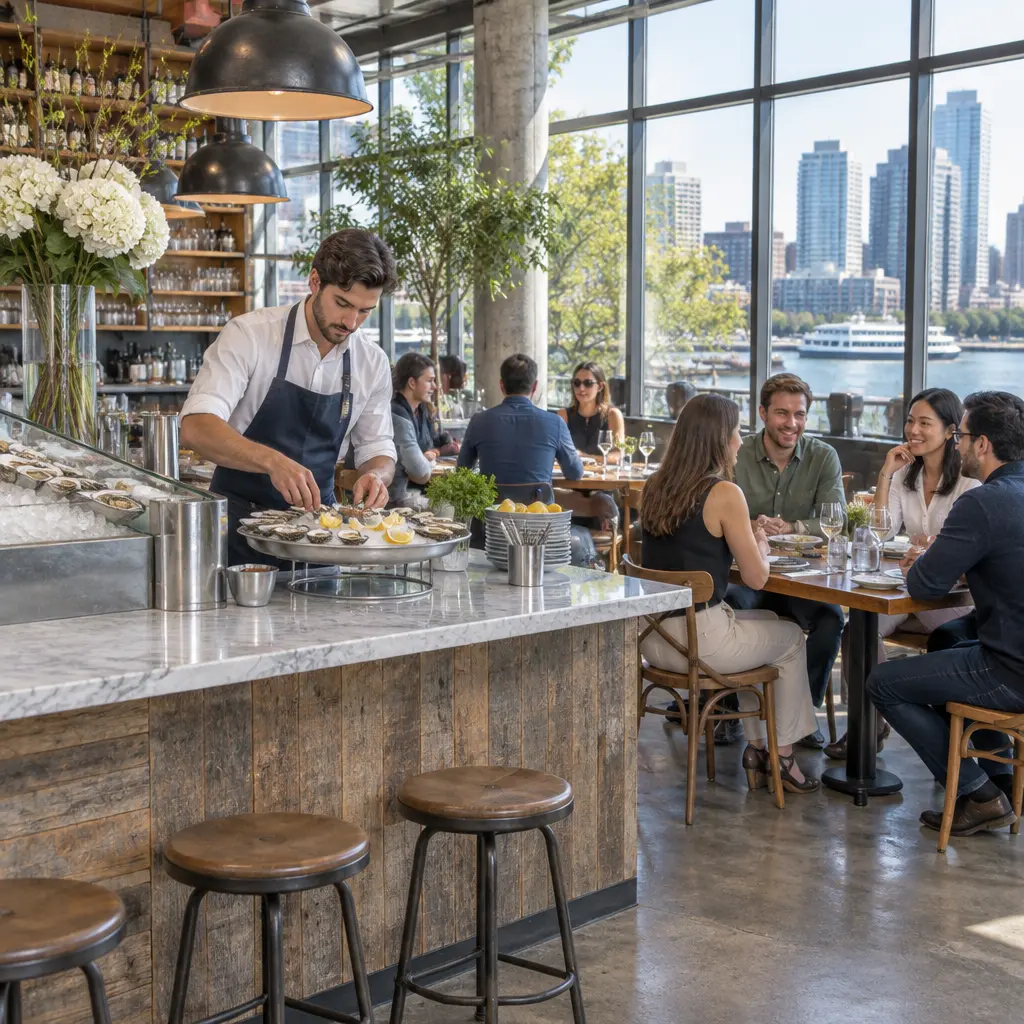
Oyster bars—restaurants or dedicated counters where oysters are a central offering, often served raw, roasted, or fried—are returning to urban dining because they combine a distinctive food experience with social, flexible dining and a renewed interest in seafood provenance. Their appeal reflects broader restaurant trends, including demand for experiences beyond a standard meal and continued interest in seafood: NOAA Fisheries reports that U.S. per-capita consumption of fish and shellfish was 19.2 pounds in 2022. From the historic raw bar to contemporary, sustainability-minded menus, oyster bars offer cities a way to connect culinary heritage, coastal supply chains, and lively neighborhood hospitality.
Why Oyster Bars Are Reappearing in Urban Dining
An oyster bar is a hospitality format organized around oysters and other raw-bar seafood, typically served at a counter or in a compact dining room. The comeback is not simply a revival of an old-fashioned menu: modern oyster bars package freshness, visible preparation, and a casual sense of occasion into a format that suits both a quick snack and a longer night out. The National Restaurant Association’s 2024 industry outlook identified restaurant experiences and consumer interest in value as important forces shaping dining choices, conditions that help explain the appeal of shareable, customizable raw-bar meals.
The format also fits urban neighborhoods where diners seek distinctive local businesses and restaurants need versatile service models. A menu can center on oysters while offering cooked seafood, small plates, and drinks for guests who do not eat raw shellfish. That flexibility, paired with the oyster’s strong connection to place and season, helps the category feel both traditional and current.
Oyster Bar Revival: Heritage, Format, and Urban Appeal
Food historian Mark Kurlansky, in The Big Oyster, documents how oysters became an important part of New York’s food culture, available to a wide range of residents before pollution, overharvesting, and urban development contributed to the decline of local oyster beds. His account illustrates a key attribute of the oyster bar: it is not only a place to eat shellfish, but also a dining institution linked to a city’s history, waterways, and identity.
Today’s oyster bars include several related formats: classic raw bars with a broad selection of oysters; neighborhood restaurants built around oysters and seafood; and hybrid bars that pair shellfish with cocktails, wine, or other small plates. The common thread is a focused menu that makes the product and its origin part of the experience. That focus connects directly to the modern emphasis on provenance and responsible sourcing.
The Raw Bar as a Social Dining Format
A raw bar is a counter or service area where uncooked shellfish—most often oysters on the half shell—are shucked and served chilled, usually with lemon and sauces. The preparation is visible and immediate, giving diners a small performance as well as a dish. Because oysters are commonly ordered by the piece or half-dozen, guests can sample several varieties, share an order, or add oysters to a larger meal.
That modular format suits urban dining patterns: a guest can stop for a few oysters and a drink, while a group can build a meal from multiple rounds and plates. The National Restaurant Association’s consumer research regularly tracks the importance of experience, convenience, and perceived value in restaurant choices; oyster bars respond by making the meal interactive and adjustable rather than fixed to a single entrée.
A Culinary Link to City and Coast
Oyster bars give menus a strong sense of place because oysters are often identified by growing region, bay, or farm. Differences in salinity, minerals, and growing conditions influence flavor and texture, making a tasting flight a way to explore coastal geography. In New York, for example, restaurants participate in a food culture shaped by the city’s historic relationship with its harbor, even as many oysters served today come from farms elsewhere along the Atlantic coast.
The connection is increasingly relevant as restoration projects seek to rebuild oyster habitat. The Billion Oyster Project, a New York City nonprofit, reports that it has restored more than 100 million oysters to New York Harbor through school and community partnerships. These restoration oysters are not a direct source for restaurant menus, but the project demonstrates how oysters have become symbols of urban ecological recovery as well as regional cuisine.
Sustainable Oyster Sourcing and Dining Confidence
Sustainable oyster sourcing means buying shellfish from farms or fisheries managed to protect the resource, maintain safe harvest conditions, and reduce unnecessary environmental impacts. The National Oceanic and Atmospheric Administration (NOAA) describes aquaculture as the farming of aquatic organisms under controlled conditions; farmed oysters are a major part of the U.S. oyster supply. NOAA Fisheries’ 2022 seafood consumption report recorded 19.2 pounds of fish and shellfish consumed per person in the United States, indicating the scale of the broader seafood market in which oyster bars operate.
Oysters are filter feeders, and oyster aquaculture generally does not require feed inputs in the way many finfish farms do. However, environmental benefits depend on site conditions and farm practices, and shellfish safety depends on monitoring harvest waters. For diners and operators, traceable sourcing and careful handling are therefore as important as sustainability claims. This supply-chain focus leads to the practical question of how oyster bars maintain trust and safety.
Farmed Oysters, Traceability, and Provenance
Most restaurant oysters are farmed, with growers cultivating them in coastal waters and harvesting them at market size. A well-run oyster menu identifies growing areas or farms, allowing diners to compare origins and helping restaurants tell a credible sourcing story. NOAA Fisheries and the National Oceanic and Atmospheric Administration’s aquaculture resources describe shellfish farming as a significant component of domestic seafood production, while state shellfish programs oversee harvest areas and handling requirements.
For an oyster bar, provenance is more than menu language: purchase records and shellfish tags help identify the source and harvest date of each lot. The U.S. Food and Drug Administration’s National Shellfish Sanitation Program establishes a cooperative framework for classifying growing waters and controlling shellfish handling. Restaurants can strengthen guest confidence by retaining required tags, following refrigeration procedures, and explaining where varieties come from without overstating environmental benefits.
Food Safety and Responsible Service
Raw oysters carry a food-safety risk because they can contain harmful bacteria, including Vibrio, which may cause illness. The FDA advises that cooking oysters thoroughly is the safest option for people at increased risk of foodborne illness, including individuals with certain health conditions. Responsible oyster bars use approved suppliers, keep shellfish properly chilled, prevent cross-contamination, and make raw-versus-cooked choices clear to guests.
A strong menu therefore includes alternatives such as grilled, roasted, or fried oysters, alongside raw selections. This is not merely a concession: cooked preparations broaden the audience and let chefs showcase the same ingredient in different textures and flavors. Clear staff training and accurate menu communication connect hospitality with public-health guidance.
Oyster Bars as Flexible Urban Businesses
The business case for an oyster bar rests on a distinctive identity and a service model that can support several occasions. A compact counter may require less dining-room space than a full-service restaurant, while a broader seafood menu can encourage longer visits and repeat business. Yet oysters are perishable, require skilled shucking, and can be affected by weather, harvest closures, and changing supply costs. Operators must balance an attractive variety list with reliable purchasing and careful inventory control.
Urban oyster bars also benefit from being adaptable. They can serve as an after-work destination, a date-night venue, a tourist stop, or a casual neighborhood restaurant. The strongest examples treat oysters as the anchor rather than the only reason to visit, pairing them with cooked dishes, seasonal sides, and beverages that suit different budgets and preferences.
Menu Design, Pricing, and the Guest Experience
A well-designed oyster menu explains variety, origin, and flavor in concise terms, then gives guests a practical way to order. A rotating selection can highlight seasonality, while a few familiar options make the menu accessible to first-time diners. Pairings with sparkling wine, beer, or cocktails can add an occasion-driven element, but transparent pricing by the oyster or serving is essential because market prices and sizes vary.
The service experience is part of the product. Visible shucking, knowledgeable staff, and concise explanations help diners understand why oysters from two regions taste different. Restaurants can also offer cooked options and non-seafood dishes so mixed groups are not excluded. These choices extend the raw bar’s appeal beyond specialist seafood enthusiasts.
Examples of the Modern Oyster-Bar Model
New York’s Grand Central Oyster Bar, opened in 1913, shows how an oyster-focused institution can remain part of a changing city’s dining culture. Its location, historic interior, and seafood menu make it both a restaurant and a civic landmark. In a different way, New York Harbor restoration efforts led by the Billion Oyster Project have helped renew public interest in oysters as part of the city’s ecological story. Together, these examples show the two sides of the modern revival: preserving hospitality traditions and reimagining the oyster’s relationship to urban waterways.
Contemporary independent oyster bars apply the same principles on a neighborhood scale: a concise selection from named farms, visible preparation, cooked alternatives, and a welcoming counter format. Their success depends less on nostalgia alone than on making quality, sourcing, and service understandable to guests.
Conclusion: The Future of the Urban Oyster Bar
Oyster bars are returning because they bring together culinary heritage, social dining, regional identity, and a growing interest in seafood provenance. Their raw-bar format supports flexible visits; farm and harvest-area details make the menu more connected to place; and cooked preparations and clear safety practices broaden access. NOAA’s estimate of 19.2 pounds of fish and shellfish consumed per person in 2022 provides useful context for the wider seafood market, while New York Harbor restoration illustrates the oyster’s broader cultural and environmental significance.
For diners, the best next step is to ask where oysters come from, try varieties side by side, and choose cooked oysters when raw shellfish is not appropriate. For restaurant operators, a durable comeback depends on transparent sourcing, responsible handling, thoughtful pricing, and a menu that welcomes more than one kind of guest.
Sources: NOAA Fisheries, Fisheries of the United States, 2022, https://www.fisheries.noaa.gov/national/sustainable-fisheries/fisheries-united-states; National Restaurant Association, 2024 State of the Restaurant Industry, https://restaurant.org/research-and-media/research/research-reports/state-of-the-restaurant-industry/; Mark Kurlansky, The Big Oyster: History on the Half Shell, https://www.penguinrandomhouse.com/books/292163/the-big-oyster-by-mark-kurlansky/; Billion Oyster Project, About the Project, https://www.billionoysterproject.org/about; U.S. Food and Drug Administration, National Shellfish Sanitation Program, https://www.fda.gov/food/federalstate-food-programs/national-shellfish-sanitation-program-nssp; U.S. Food and Drug Administration, Vibrio and Oysters, https://www.fda.gov/food/consumers/advice-about-eating-fish; Grand Central Terminal, Grand Central Oyster Bar, https://www.grandcentralterminal.com/dine/grand-central-oyster-bar/.