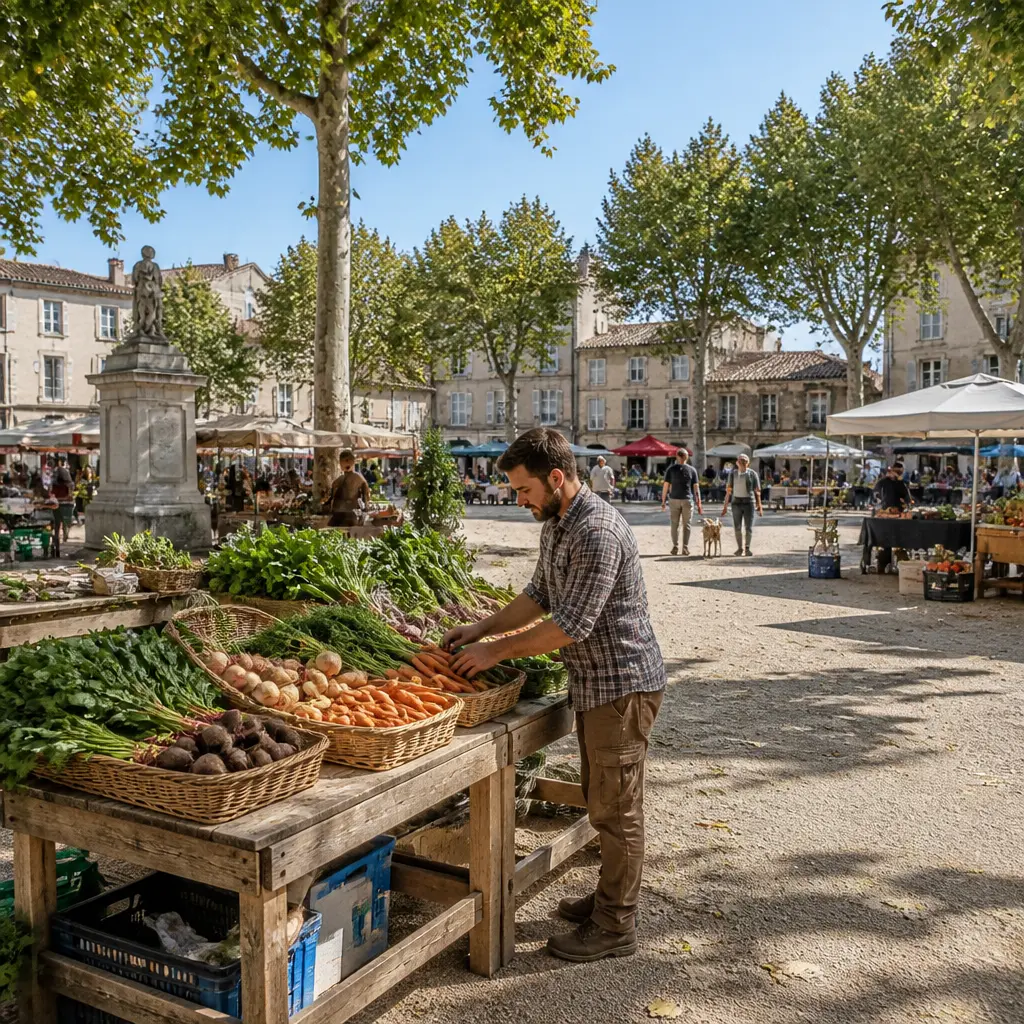
Direct producer sourcing—buying food from farmers, fishers, ranchers, and other producers through short supply chains—turns a meal into a record of place, labor, season, and stewardship. The attribute is traceable, relationship-based procurement: diners can often identify who produced an ingredient, where it came from, and how it was grown or harvested. The model includes farmers’ markets, community-supported agriculture (CSA), farm shops, restaurant purchasing, food hubs, and direct-trade arrangements. Its relevance is growing: the U.S. Department of Agriculture (USDA) reported approximately $9 billion in local food sales in its 2020 Local Food Marketing Practices Survey, while the Food and Agriculture Organization of the United Nations estimates that food systems generate about one-third of global greenhouse-gas emissions. Buying closer to the producer can strengthen rural economies, improve transparency, reduce unnecessary handling, and give consumers a more meaningful connection to the food on their plates.
Traceable Direct Producer Sourcing Defines a More Visible Food Story
Direct producer sourcing is the procurement of food from the person or enterprise responsible for producing it, with fewer commercial intermediaries between producer and eater. The attribute pairing in this article is “direct producer sourcing” and “traceability.” The International Organization for Standardization defines traceability as the ability to follow the history, application, or location of an object through identified stages of production, processing, and distribution. Applied to food, that means a buyer can connect an ingredient to a farm, fishing vessel, ranch, orchard, or producer group.
This relationship does not automatically guarantee organic certification, humane treatment, low emissions, or fair wages. Instead, it creates a stronger basis for asking questions and verifying claims. A chef who buys tomatoes directly from a grower may know the field, harvest date, variety, irrigation method, and payment terms. A shopper at a farmers’ market may be able to ask whether the seller grew the produce or resold it. The value lies in greater visibility and accountability, not in assuming that every small or local producer follows identical standards.
Short Supply Chains Connect Producers and Eaters
A short supply chain contains fewer steps between production and consumption than a conventional chain involving brokers, processors, distributors, and large retailers. The European Commission describes short food supply chains as systems with a limited number of economic operators committed to cooperation, local economic development, and close geographical and social relationships between producers and consumers.
Important hyponyms include farmers’ markets, farm stands, on-farm shops, CSAs, roadside sales, producer-owned cooperatives, restaurant-to-farm purchasing, and food hubs. Food hubs aggregate products from multiple small producers, allowing schools, hospitals, grocers, and restaurants to buy at useful volumes without eliminating the producer relationship. These models differ operationally, but each can preserve more information about origin than an anonymous commodity transaction.
Provenance Makes Place Part of the Product
Provenance is the documented origin and production history of an ingredient. It may include the farm or vessel, region, cultivar or breed, harvest date, production method, certifications, and chain of custody. Provenance is especially important for products whose quality depends on place and timing, such as specialty coffee, wine, olive oil, seafood, heritage grains, cheese, and seasonal fruit.
The story becomes credible when it is supported by records rather than attractive language alone. In seafood, for example, vessel records, landing documentation, and catch-area information can help distinguish legally harvested products from products associated with illegal, unreported, or unregulated fishing. In produce, lot numbers, harvest logs, and delivery records can support food-safety investigations. The U.S. Food and Drug Administration’s Food Traceability Rule is designed to improve the speed and precision of tracking certain foods through the supply chain.
Relationship-Based Procurement Gives Food a Human and Regional Context
Relationship-based procurement means that buyers and producers communicate repeatedly rather than meeting only through anonymous price transactions. The relationship may involve crop planning, standing orders, shared quality expectations, advance payments, feedback, and visits to the production site. It changes the buyer’s role from simply selecting a product to participating in a food system.
Community-Supported Agriculture Shares Seasonality and Risk
A CSA is a subscription arrangement in which members pay a farm before or during the growing season and receive regular shares of the harvest. The model gives producers working capital and gives members a direct view of seasonal abundance, crop failure, and farm labor. A CSA box may contain unfamiliar vegetables or varying quantities, encouraging cooking flexibility instead of year-round uniformity.
This model also reveals an important truth about direct sourcing: resilience includes uncertainty. Weather, pests, wildfire, drought, and labor shortages can change what is available. Rather than hiding those conditions behind standardized inventory, a CSA makes them visible. The relationship can therefore encourage consumers to value adaptability, preservation, and realistic expectations about agricultural production.
Direct Restaurant Purchasing Turns Menus into Producer Narratives
Restaurants that purchase directly may identify a farm, fishing community, orchard, or ranch on the menu. A dish such as “spring peas from Green Valley Farm with regional goat cheese” communicates more than an ingredient list: it identifies season, geography, and contributors. Chefs can reinforce the connection by discussing harvest conditions, paying promptly, and designing menus around what producers can reliably supply.
Direct purchasing can also improve culinary quality because shorter time between harvest and preparation may preserve freshness. However, the benefit depends on handling, refrigeration, transport distance, and infrastructure. “Local” is not a guarantee of superior flavor or lower environmental impact; the relevant comparison includes production methods, delivery efficiency, storage, and waste.
Direct Trade Can Make Payment and Standards More Visible
Direct trade is a sourcing arrangement in which a buyer forms a continuing commercial relationship with a producer or producer group, often with negotiated quality standards and pricing. It is common in coffee, cocoa, spices, and other globally traded products. The term should not be confused with a universal certification. A company may describe a relationship as direct while providing limited public evidence about prices, labor conditions, or producer decision-making.
Strong direct-trade programs disclose more than a farm name. They explain how prices are set, how premiums are distributed, what quality criteria apply, and whether producers have meaningful bargaining power. Fairtrade International, the International Trade Centre, and agricultural cooperatives offer frameworks that can help buyers compare claims, but consumers should still examine the evidence behind marketing language.
Local Economic Circulation Makes the Plate Part of a Regional System
Local economic circulation occurs when food spending remains within a region through payments to producers, farm workers, processors, transporters, market operators, and local food businesses. Direct sourcing can help smaller farms retain a larger share of the final price, particularly when they sell differentiated products rather than undifferentiated commodities.
Food Hubs and Institutional Buyers Expand Producer Access
Food hubs are enterprises that coordinate aggregation, storage, distribution, marketing, and sometimes processing for multiple producers. They address a central limitation of direct sourcing: a single small farm may not have enough volume, refrigeration, delivery capacity, or administrative support to serve a hospital or school district alone.
Institutional purchasing can create stable demand, but successful programs require practical specifications. Buyers may need to accept seasonal substitutions, coordinate delivery windows, simplify invoicing, and use contracts that do not shift excessive risk onto producers. The USDA’s local and regional food programs have supported infrastructure and market development for these purposes.
Equity Determines Who Can Participate
Direct sourcing is not automatically equitable. Farmers’ markets and subscription boxes may be inaccessible to households with limited income, limited transportation, or inflexible work schedules. Producers also face barriers involving land access, credit, insurance, cold storage, licensing, and market scale.
More inclusive models accept nutrition benefits, offer sliding-scale shares, locate markets near public transportation, partner with community organizations, and purchase from historically underserved producers. The USDA’s Gus Schumacher Nutrition Incentive Program, commonly known as GusNIP, supports projects that make fruits and vegetables more affordable for people participating in nutrition-assistance programs.
Environmental Stewardship Requires Evidence Beyond Local Distance
Environmental stewardship is the management of soil, water, biodiversity, energy, and waste in ways intended to protect future production. Direct relationships can make stewardship practices easier to discuss and reward, including cover cropping, rotational grazing, reduced tillage, integrated pest management, habitat protection, and careful water use.
Production Methods Matter More Than a Simple Food-Miles Claim
Food miles measure transport distance, but they do not measure the full environmental footprint of a product. Production method, yield, heating or cooling requirements, packaging, storage, and delivery efficiency can be more influential. Research published in the journal Nature Food has shown that transport represents a smaller portion of food-system emissions than many consumers assume, although transport remains important for highly perishable and air-freighted products.
A nearby heated greenhouse may use more energy than field-grown produce transported from a moderate distance. Conversely, a consolidated delivery from several local farms may reduce trips compared with many individual household journeys. The most responsible question is therefore not simply “How far did it travel?” but “How was it produced, moved, stored, and used?”
Seasonality Can Reduce Waste and Improve Accountability
Seasonal sourcing aligns purchasing with natural harvest periods and can reduce dependence on long storage, extensive packaging, and emergency substitutions. It also makes waste more visible. The U.S. Environmental Protection Agency estimates that food makes up roughly one-fifth of municipal solid waste disposed of in the United States, making careful purchasing, preservation, donation, and portion planning important parts of a responsible sourcing system.
A direct relationship can support practical waste reduction: buyers can request seconds for sauces, purchase cosmetically imperfect produce, preserve surplus, or coordinate orders before harvest. Producers benefit from a dependable outlet, while consumers learn that quality includes flavor, nutrition, and usefulness—not only standardized appearance.
Verification Keeps a Compelling Food Story Honest
Verification is the process of checking whether a sourcing claim is supported by records, observation, certification, testing, or credible third-party review. Direct contact makes verification easier, but it does not replace it. A producer may be sincere and still lack documentation, and a large certified supplier may provide stronger evidence than an informal local seller.
Consumers Can Ask Specific Questions
Useful questions turn a vague story into accountable information:
- Who produced or harvested this food?
- Where was it grown, raised, or caught?
- When was it harvested or delivered?
- Which practices support the environmental or labor claim?
- How was the producer paid, and who sets the price?
- What certification, inspection, or record supports the claim?
Buyers Can Build Traceability into Routine Purchasing
Restaurants, retailers, and institutions can make direct sourcing more reliable by maintaining approved-producer lists, recording lot information, using written specifications, confirming delivery temperatures, and reviewing payment terms. A simple purchasing record can connect an ingredient to its producer, delivery date, invoice, and storage location. These procedures support both food safety and storytelling.
A useful visual for readers is a “plate-to-producer” flow chart showing the path from producer, harvest, aggregation, transport, kitchen, and diner. A second chart could compare direct sales, food-hub sales, and conventional wholesale channels by number of intermediaries, information retained, producer reach, and logistical complexity.
Conclusion: A More Informed Plate Begins with a More Visible Relationship
Direct producer sourcing gives food a traceable origin, a human relationship, and a regional economic context. Short supply chains can connect diners with farmers and fishers; provenance can document place and practice; CSAs can reveal seasonality; food hubs can expand access; and direct trade can make prices and standards more discussable. Yet the story is strongest when supported by verification, fair participation, practical logistics, and evidence about environmental performance.
Consumers can begin by visiting a farmers’ market, joining a CSA, asking a restaurant about its suppliers, or choosing products with transparent producer information. Businesses can create written sourcing standards and pay producers promptly. The broader goal is not merely to make meals sound more interesting. It is to build food systems in which the people, places, and practices behind a plate are visible enough to value—and accountable enough to improve.
Sources: U.S. Department of Agriculture National Agricultural Statistics Service, 2020 Local Food Marketing Practices Survey, https://www.nass.usda.gov/Publications/AgCensus/2022/Online_Resources/Local_Food/; Food and Agriculture Organization of the United Nations, The State of Food and Agriculture 2021, https://www.fao.org/publications/sofa/2021/en/; International Organization for Standardization, ISO 22005:2007 Traceability in the Feed and Food Chain, https://www.iso.org/standard/36297.html; European Commission, Short Food Supply Chains, https://agriculture.ec.europa.eu/common-agricultural-policy/rural-development/supporting-farmers/short-food-supply-chains_en; U.S. Food and Drug Administration, Food Traceability Final Rule, https://www.fda.gov/food/food-safety-modernization-act-fsma/food-traceability-final-rule; U.S. Department of Agriculture, Local and Regional Food Systems, https://www.ams.usda.gov/services/local-regional; U.S. Department of Agriculture, Gus Schumacher Nutrition Incentive Program, https://www.nifa.usda.gov/grants/programs/gus-schumacher-nutrition-incentive-program; U.S. Environmental Protection Agency, Sustainable Management of Food, https://www.epa.gov/sustainable-management-food; McKinsey & Company, Reducing Food Loss and Waste, https://www.mckinsey.com/industries/agriculture/our-insights/reducing-food-loss-and-waste