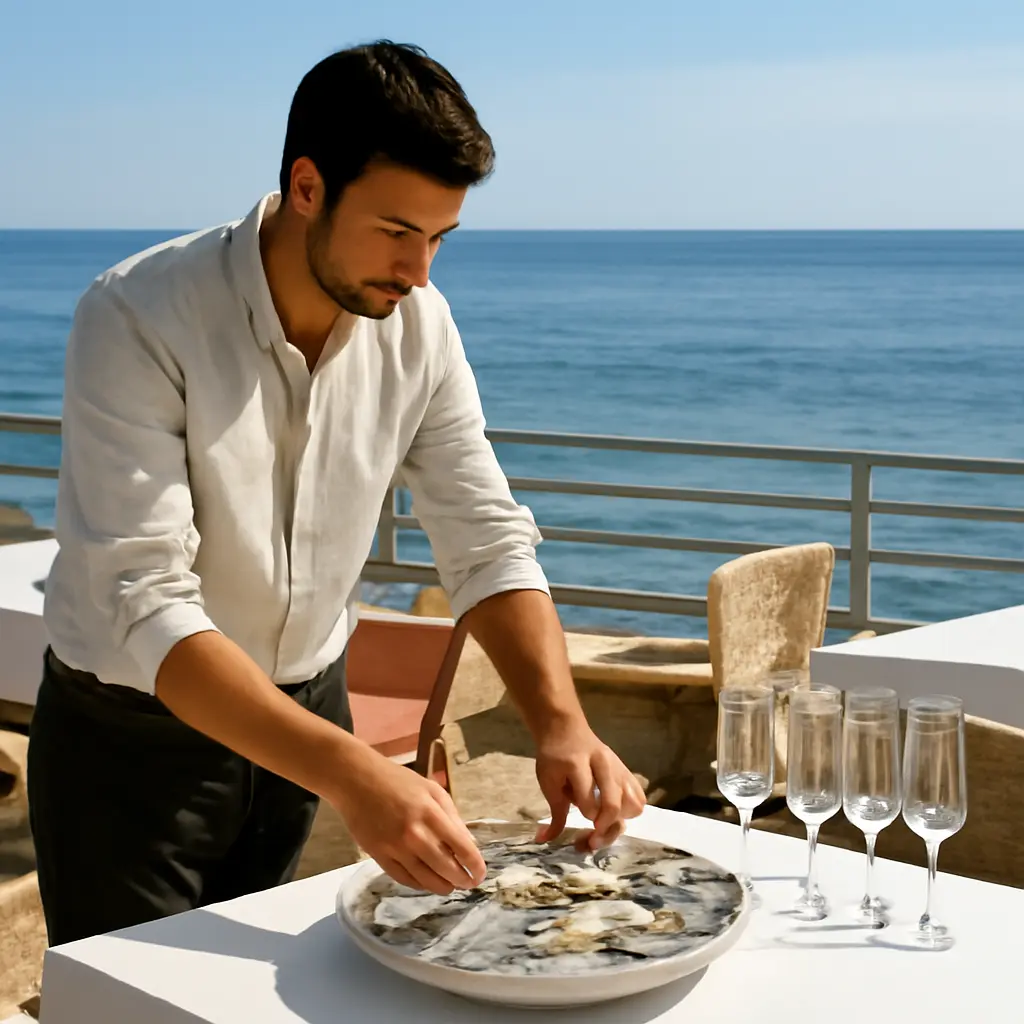
Oysters and Champagne are a classic luxury pairing because they unite two products associated with place, craft, rarity, and ceremony while creating a strong sensory contrast: briny, mineral-rich oysters meet sparkling wine’s acidity, bubbles, and citrus-like freshness. The combination is more than a status signal. Champagne’s acidity can refresh the palate after each oyster, while its carbonation and cool temperature amplify the perception of freshness. The pairing also draws authority from protected origin: “Champagne” refers to sparkling wine produced under the rules of the Champagne appellation in northeastern France, while oysters are valued for their coastal provenance, seasonality, and distinct regional flavors. Industry data reinforces the scale of the ritual: Champagne shipments totaled roughly 299 million bottles in 2023, according to the Comité Champagne, while global aquaculture supplies the overwhelming majority of oysters consumed worldwide, according to the Food and Agriculture Organization of the United Nations.
Create: Oysters and Champagne Sensory Complementarity
Oysters and Champagne sensory complementarity is the way two foods or drinks improve one another through contrasting or matching sensory properties, including flavor, aroma, texture, temperature, acidity, salinity, and finish. In food-and-wine analysis, this is commonly described through two mechanisms: congruence, in which shared characteristics reinforce one another, and contrast, in which opposing characteristics create balance. The pairing succeeds through both. Oysters and Champagne share marine, mineral, and citrus associations, yet they contrast in texture and structure: the oyster is cool, soft, and saline, while Champagne is effervescent, acidic, and dry.
The pairing’s main hyponyms include raw oyster and brut Champagne, raw oyster and blanc de blancs, oyster with grower Champagne, and regional oyster with vintage or prestige cuvée. These are not interchangeable experiences. A delicate oyster may suit a lean, citrus-driven wine, whereas a larger, creamier oyster can support a fuller Champagne with more autolytic character. The bridge between these versions is balance: neither component should overwhelm the other.
Acid-Salt Balance
Acid-salt balance describes the interaction between Champagne’s tartness and an oyster’s salinity. Acidity stimulates salivation and gives a wine a cleansing finish, which is especially useful after a briny bite. Oysters contain seawater-derived salts and flavor compounds that can make low-acid wines taste flat or heavy. Brut Champagne, especially a young and relatively dry style, counters that effect with lively acidity.
Dryness matters as well. Brut Champagne may contain up to 12 grams of residual sugar per liter under current European wine regulations, although many modern examples taste considerably drier. Extra brut and brut nature styles can make the oyster seem even sharper and more saline, while a standard brut often provides a rounder, more forgiving match. The ideal choice depends on the oyster’s flavor: intensely saline oysters often benefit from a wine with some fruit richness, while creamy oysters can handle a tauter, more mineral style.
Effervescence and Texture
Effervescence is the presence and release of carbon dioxide bubbles in sparkling wine. Champagne acquires its bubbles through a second fermentation in the bottle, followed by maturation on the lees, or spent yeast cells. This traditional method contributes both carbonation and texture. The bubbles lift aromas, stimulate the palate, and help prevent the oyster’s soft texture from feeling monotonous.
The Comité Champagne identifies a minimum period of 15 months of aging for nonvintage Champagne and 36 months for vintage Champagne, although many producers age their wines longer. Extended lees aging can create notes of brioche, toast, pastry, and hazelnut. Those flavors are particularly effective with oysters served with bread, cultured butter, or a restrained mignonette, but they may distract from an exceptionally delicate oyster served plain.
Signal: Oysters and Champagne Luxury Provenance
Oysters and Champagne luxury provenance refers to the way origin, controlled production, specialist labor, and cultural history turn a meal into a sign of refinement. Luxury is not simply a high price; it is also a story about scarcity, authenticity, skill, and access. Champagne’s protected designation of origin limits where and how the wine may be made. Oyster producers similarly distinguish their products by bay, estuary, growing method, species, and finishing conditions.
Champagne production is concentrated across approximately 34,000 hectares of vineyards and is governed by detailed rules concerning grape varieties, yields, pressing, fermentation, aging, and labeling. The principal permitted grapes are Chardonnay, Pinot Noir, and Meunier. Oysters have their own language of provenance: French examples may be identified by areas such as Marennes-Oléron, Brittany, or Normandy, while North American oysters may be associated with particular bays and estuaries. This regional vocabulary lets diners taste geography as well as ingredients.
Protected Origin and Authenticity
Protected origin is a legal and cultural system that links a product’s name and characteristics to a defined place. Champagne is one of the world’s most recognizable examples: sparkling wine made elsewhere cannot legally use the Champagne name in markets that recognize the appellation. This protection supports the perception that the bottle represents a specific landscape and production tradition rather than merely a beverage category.
Oysters communicate place more immediately through taste. Water salinity, tidal movement, temperature, algae, sediment, and cultivation time influence an oyster’s sweetness, salinity, and texture. The American Culinary Federation and seafood educators commonly emphasize that oysters should be kept cold, handled carefully, and identified by harvest location. A platter labeled by bay or coast therefore functions as a form of culinary provenance, much like a vineyard designation on a wine list.
Ritual, Scarcity, and Social Theater
Ritual is another reason the pairing feels luxurious. Opening a Champagne bottle, selecting stemware, arranging oysters on crushed ice, and presenting a shell knife all create visible stages of expertise. The guest does not merely consume food; the guest participates in a performance of hospitality.
Historically, oysters were not always luxury foods. In nineteenth-century Europe and North America, improvements in dredging, rail transport, and refrigeration made them widely available in cities. Overharvesting later reduced wild oyster populations in many regions, while modern aquaculture and stricter supply chains repositioned oysters as carefully managed premium products. Champagne followed a related cultural path: once associated with royal courts and aristocratic celebration, it became a global symbol of achievement, weddings, launches, and New Year’s rituals.
Refine: Oysters and Champagne Pairing Styles
Oysters and Champagne pairing styles are categories based on oyster flavor, wine structure, preparation, and occasion. The most reliable approach is to match intensity rather than price. A rare oyster does not automatically require the most expensive bottle. In fact, a restrained nonvintage Champagne may reveal a pristine oyster more clearly than a powerful prestige cuvée.
Raw Oysters with Brut Champagne
Raw oysters with brut Champagne form the foundational pairing. A classic brut offers acidity, moderate dryness, and enough fruit to soften salinity. Serve the wine well chilled, generally around 8 to 10 degrees Celsius for a young Champagne, and keep the oysters on well-drained crushed ice. Excess meltwater can dilute both the oyster liquor and the wine experience.
For a clean comparison, serve several oysters from different growing areas without heavy toppings. A small amount of lemon can emphasize freshness, but strong vinegar mignonette, hot sauce, or cocktail sauce may dominate the Champagne’s aromas. The U.S. Food and Drug Administration also warns that raw oysters can carry harmful pathogens, so vulnerable individuals should choose fully cooked oysters rather than rely on appearance, smell, or alcohol to establish safety.
Creamy Oysters with Blanc de Blancs
Creamy oysters with blanc de blancs create a particularly elegant variation. Blanc de blancs is Champagne made exclusively from white grapes, most commonly Chardonnay. These wines often show citrus, chalk, floral notes, and a fine, lifted structure. Their precision cuts through richness while preserving the oyster’s delicate sweetness.
This style works well when oysters are served with a light cucumber, apple, or herb garnish. The key is restraint. Ingredients with intense sweetness, smoke, chili, or cream can shift the pairing from refreshing to unbalanced. A simple tasting flight can illustrate the effect: compare a saline oyster with a lean blanc de blancs, then compare a plumper oyster with a more mature Chardonnay-dominant Champagne.
Cooked Oysters with Mature Champagne
Cooked oysters with mature Champagne suit preparations involving butter, breadcrumbs, mushrooms, or gentle roasting. Cooking changes the oyster’s texture and concentrates its savory character, so a wine with lees-derived toast and nutty complexity can perform better than an extremely austere young bottle.
A useful restaurant example is a roasted oyster paired with an aged vintage Champagne: the wine’s acidity prevents buttery sauces from becoming heavy, while its developed aromas echo browned crumbs and toasted grain. This is a broader principle of pairing—once preparation changes the ingredient, the wine should be selected for the finished dish rather than the raw product.
Measure: Oysters and Champagne Luxury Value
Oysters and Champagne luxury value is the combined economic, sensory, symbolic, and experiential worth that diners assign to the pairing. Price contributes, but value also comes from freshness, service, provenance, storytelling, and occasion. The pairing can be expensive in a fine-dining room, yet its basic structure is accessible: a modest brut Champagne and a few fresh oysters can deliver the same fundamental contrast of acidity, salinity, coolness, and bubbles.
A useful way to visualize the experience is a four-axis chart comparing acidity, salinity, texture, and perceived status. Oysters score high in salinity and softness; Champagne scores high in acidity, effervescence, and ceremonial association. The pairing feels luxurious because the sensory axes are complementary while the cultural axis is shared. Both products suggest craftsmanship, controlled handling, and a specific origin.
Conclusion: Oysters and Champagne Sensory Complementarity
Oysters and Champagne feel like pure luxury together because the pairing aligns three forms of meaning: sensory balance, geographic provenance, and social ritual. Acidity refreshes the palate, bubbles animate the oyster’s soft texture, and mineral or citrus notes echo the sea. Protected origin and detailed production rules give both products a credible story of place and craft, while chilled service, crushed ice, stemware, and bottle opening turn that story into an occasion.
The best way to explore the pairing is to compare rather than assume: taste a saline oyster with a dry brut, a creamy oyster with blanc de blancs, and a cooked oyster with a mature vintage Champagne. Record differences in texture, finish, sweetness, and aroma. Further reading from the Comité Champagne, the Food and Agriculture Organization, the U.S. Food and Drug Administration, and regional oyster organizations can deepen appreciation of how farming, climate, regulation, and food safety shape this celebrated luxury combination.
Sources: Comité Champagne, Champagne Facts and Figures, https://www.champagne.fr/en/; Comité Champagne, Champagne Production Regulations, https://www.champagne.fr/en/about-champagne/the-champagne-appellation; Food and Agriculture Organization of the United Nations, The State of World Fisheries and Aquaculture 2024, https://www.fao.org/publications/home/fao-flagship-publications/the-state-of-world-fisheries-and-aquaculture/en; U.S. Food and Drug Administration, Bad Bug Book: Vibrio parahaemolyticus, https://www.fda.gov/food/consumers/what-you-need-know-about-vibrio-parahaemolyticus-and-oysters; European Commission, Wine: Geographical Indications and Traditional Terms, https://agriculture.ec.europa.eu/farming/crop-productions-and-plant-based-products/wine_en; Oxford University Press, The Oxford Companion to Wine, https://www.oxfordreference.com/display/10.1093/acref/9780198705383.001.0001/acref-9780198705383