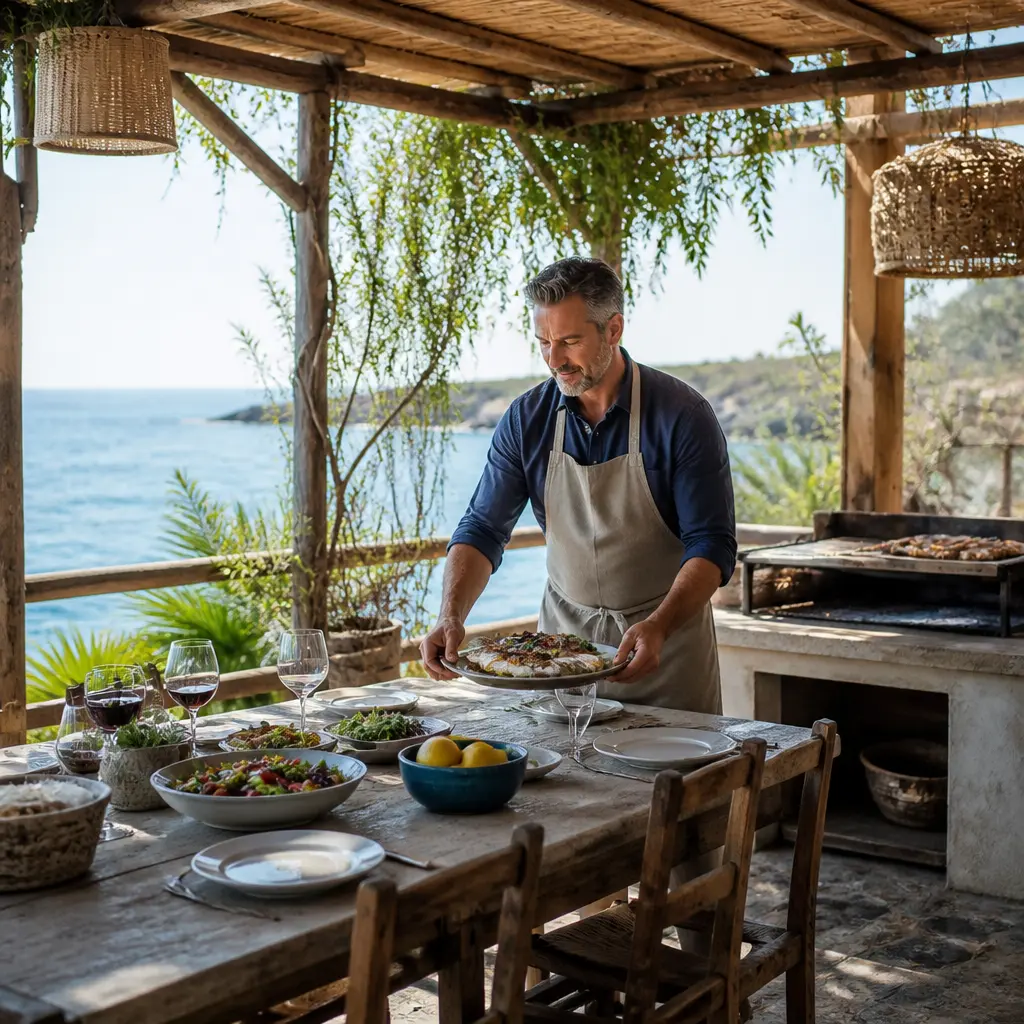
Grilled fish–bold red compatibility is the practice of matching smoky, charred seafood with structured red wine by considering preparation, sauce, acidity, tannin, and serving temperature rather than relying on the old rule that fish requires white wine. The strategy works best with oily fish such as salmon, tuna, swordfish, and mackerel, especially when grilling creates browned crust and smoke. It matters because seafood remains a major part of dietary guidance—the U.S. Dietary Guidelines recommend at least 8 ounces of seafood weekly for many adults—while wine pairing can improve both perceived flavor balance and menu flexibility. The key is not simply choosing a powerful red, but selecting a red with sufficient acidity, moderate tannin, and fruit that can meet the fish’s richness without overwhelming its texture.
Why Grilled Fish–Bold Red Compatibility Works
Grilled fish–bold red compatibility can be defined as a sensory match in which the wine’s acidity, tannin, alcohol, fruit intensity, and savory character balance the fish’s fat, umami, smoke, seasoning, and cooking method. Wine educators such as Karen MacNeil and Jancis Robinson describe pairing as an interaction between food structure and wine structure rather than a rigid color-based rule. In practical terms, grilling changes the pairing equation: high heat creates browning, caramelized edges, and smoky flavors that make some fish taste more substantial than steamed or poached versions.
The most useful hyponyms are oily-fish pairing, meaty-fish pairing, smoky-fish pairing, and sauce-driven pairing. Oily fish emphasizes the wine’s need for acidity; meaty fish can support greater body; smoky fish welcomes earthy or peppery reds; and sauce-driven dishes should be matched primarily to the sauce. A tomato relish, olive tapenade, mushroom sauce, or pepper-based marinade may exert more influence on the pairing than the fish itself.
Oily Fish and Acidity
Oily fish contains enough richness to make a fresh, high-acid red more convincing than a soft, low-acid red. Grilled salmon, tuna, sardines, and mackerel are useful examples. Acidity refreshes the palate after each bite, much as lemon juice or vinegar does, while moderate tannin gives the wine shape. Pinot Noir, Barbera, cool-climate Syrah, and lighter Cabernet Franc can perform well because they combine freshness with savory or peppery notes.
The U.S. Food and Drug Administration and the U.S. Environmental Protection Agency classify salmon, sardines, and several other seafood choices among lower-mercury options that can be eaten regularly within their serving guidance. This reinforces the relevance of oily-fish pairing: these species are both nutritionally important and flavorful enough to support a broader range of wines than delicate white-fleshed fish.
Meaty Fish and Tannin
Meaty-fish pairing refers to matching firm, steak-like fish with a red wine that has moderate structure. Swordfish, tuna, halibut, and grilled salmon have dense textures that can withstand more body than sole or cod. However, very high tannin remains risky. Tannins create a drying sensation and can make metallic or bitter notes more noticeable when combined with the mineral, salty, or iron-like flavors found in some seafood.
For this reason, a young, aggressively tannic Cabernet Sauvignon or heavily oaked red blend is usually less reliable than a mature or cooler-climate version. A softer Merlot, restrained Cabernet Franc, Rioja with some bottle age, or Northern Italian red can provide structure without turning the fish harsh. Decanter’s pairing guidance similarly emphasizes that robust fish can handle red wine when the wine is not excessively tannic and the preparation supplies enough savory depth.
Smoke, Char, and Savory Red-Wine Styles
Smoke-and-char pairing connects the grill’s browned flavors with earthy, peppery, or lightly smoky wine characteristics. A grilled swordfish steak with olive oil and herbs may suit a medium-bodied Syrah; tuna with sesame and soy can work with a bright, low-tannin red such as Schiava or Gamay; and salmon with a smoky paprika rub can support Pinot Noir or a restrained Grenache blend.
The important distinction is between complementary smoke and excessive heaviness. A wine with intense oak, high alcohol, and concentrated fruit may magnify charred bitterness. By contrast, a red with savory notes, moderate alcohol, and lively acidity can echo the grill while keeping the fish recognizable. Wine Folly’s broader pairing principles identify acidity, body, and flavor intensity as central variables, which explains why lighter expressions of traditionally bold grapes often outperform their most concentrated counterparts.
How Preparation Changes the Fish-and-Red Equation
Herbs, Citrus, and Fresh Condiments
Fresh herbs and citrus increase the dish’s apparent brightness, so the wine should have comparable freshness. Grilled salmon with dill, lemon, or salsa verde is more compatible with Pinot Noir, Barbera, or a crisp red blend than with a plush, high-alcohol red. Lemon does not automatically prohibit red wine; it simply raises the acidity requirement and makes flat or overly sweet wines seem heavier.
Tomato, Pepper, and Mediterranean Sauces
Tomato-based sauces are naturally acidic and often contain garlic, chili, olive oil, or herbs. These flavors create a bridge to reds such as Sangiovese, Mencía, or Grenache. A grilled tuna steak with puttanesca-style tomato, olive, and caper sauce may therefore suit a red more readily than plain tuna. In this case, the sauce is the dominant pairing signal, while the fish supplies texture and umami.
Soy, Sesame, and Sweet-Spicy Glazes
Soy-based marinades introduce salt and umami, while honey, brown sugar, or fruit glazes introduce sweetness. Salt can soften the perception of tannin, but sweetness can make a dry red taste austere if the wine is less sweet than the dish. For teriyaki-style grilled salmon, choose a fruit-forward, low-tannin red served slightly cool, such as Gamay, Zweigelt, or an unoaked red blend. Very spicy sauces call for lower alcohol because alcohol can intensify the sensation of heat.
A Practical Selection Framework for Bold Reds
A useful decision sequence is to identify the fish’s fat level, assess the degree of grill char, determine the sauce’s dominant flavor, and then choose the wine’s structure. The following text-based chart summarizes the approach: delicate fish with light seasoning points toward a pale or low-tannin red; oily fish with herbs points toward bright, medium-bodied red; firm fish with char points toward structured but fresh red; and fish with tomato or pepper sauce can support the fullest red in the meal.
- Choose acidity first for oily fish or citrus-heavy dishes.
- Choose moderate tannin for firm fish, smoke, and grilled crust.
- Match body to the sauce rather than to the fish’s color alone.
- Serve many reds slightly cool, generally around 13–16°C, when pairing with seafood.
- Avoid excessive oak, alcohol, and tannin unless the dish includes a rich, savory sauce.
Serving temperature is especially important. Cooling a red modestly can make it taste fresher and less alcoholic, but over-chilling can suppress aroma and exaggerate tannin. The aim is not to serve red wine cold like a sparkling wine; it is to preserve lift alongside the fish.
Real-World Pairings and Common Mistakes
A restaurant-style example is grilled salmon with lentils, mustard, and herb oil paired with cool-climate Pinot Noir. The salmon provides fat, the lentils add earthiness, and the mustard calls for acidity. Another is grilled swordfish with roasted peppers and tomato, paired with Sangiovese. The wine’s acidity mirrors the tomato, while its savory character complements the char. For tuna with cracked pepper and olive tapenade, a medium-bodied Syrah can work when it is fresh rather than heavily oaked.
The most common mistake is treating “bold red” as a synonym for “high alcohol and high tannin.” Boldness can instead come from savory concentration, dark fruit, spice, or a firm but balanced finish. A second mistake is ignoring the cooking method. The same cod may call for a white wine when steamed, a rosé when grilled with herbs, or a light red when coated in tomato and pepper sauce. Pairing should follow the finished dish, not the raw ingredient.
Conclusion: Grilled Fish–Bold Red Compatibility as a Flexible Strategy
Grilled fish–bold red compatibility succeeds when acidity, tannin, body, smoke, and sauce are evaluated together. Oily-fish pairing favors freshness; meaty-fish pairing allows moderate structure; smoke-and-char pairing benefits from savory reds; and sauce-driven pairing may make tomato, pepper, or umami the primary guide. The broader lesson is that wine color is only a starting point. Cooks and hosts can expand seafood menus by choosing reds with restraint, serving them slightly cool, and matching their structure to the preparation. For further experimentation, compare the same fish with a high-acid Pinot Noir, a medium-bodied Syrah, and a soft Sangiovese while keeping the cooking method constant; the contrast makes the principles immediately apparent.
Sources: U.S. Department of Agriculture and U.S. Department of Health and Human Services, Dietary Guidelines for Americans, 2020–2025, https://www.dietaryguidelines.gov/; U.S. Food and Drug Administration and U.S. Environmental Protection Agency, Advice About Eating Fish, https://www.fda.gov/food/consumers/advice-about-eating-fish; National Oceanic and Atmospheric Administration Fisheries, Fisheries of the United States, https://www.fisheries.noaa.gov/national/sustainable-fisheries/fisheries-united-states; Jancis Robinson, The Oxford Companion to Wine, https://www.jancisrobinson.com/ocw; Karen MacNeil, The Wine Bible, https://www.karenmacneil.com/; Decanter, Wine Pairing with Fish and Seafood, https://www.decanter.com/learn/food-and-wine-pairing-fish-and-seafood-367139/; Wine Folly, Wine and Food Pairing Guide, https://winefolly.com/tips/wine-food-pairing-chart/