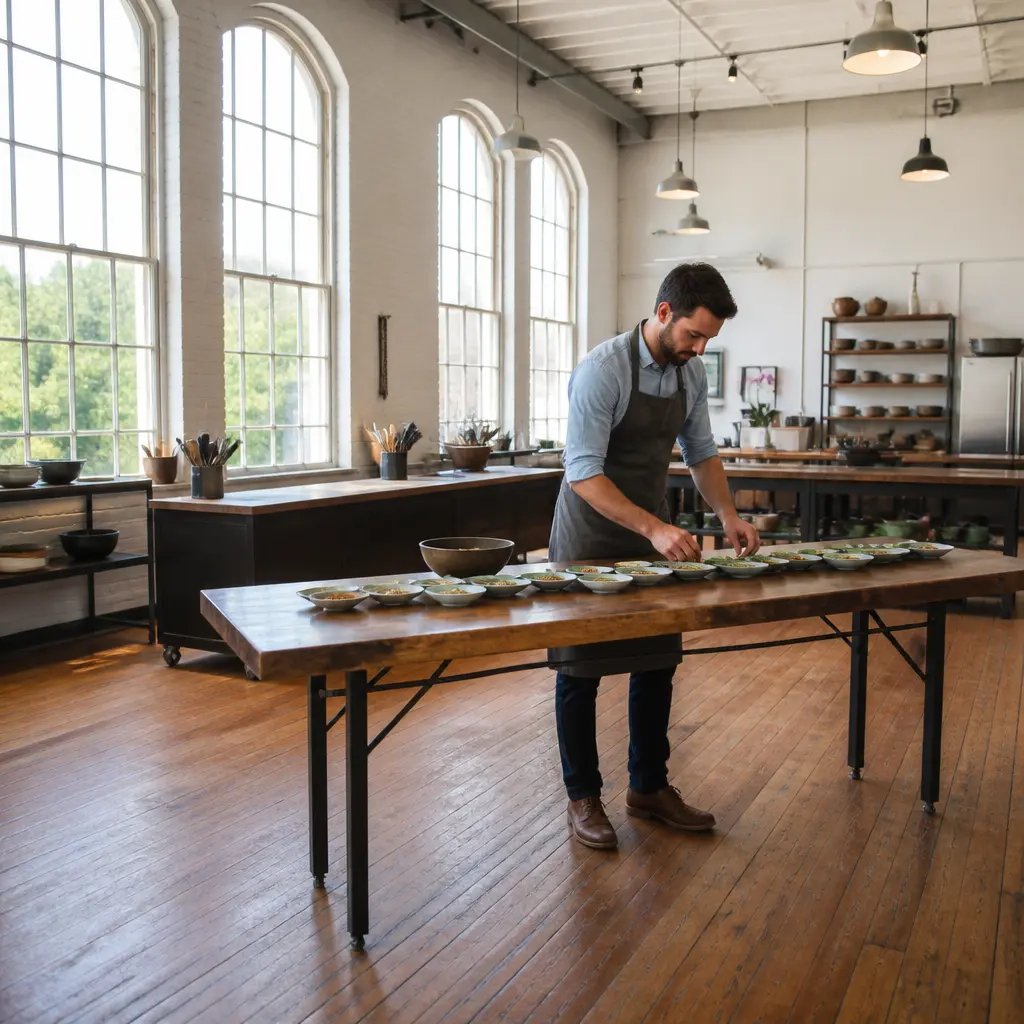
A tasting flight is a deliberately sequenced set of small samples, while a texture progression is the planned movement from one mouthfeel experience to another. Structuring the flight around texture means arranging pieces by qualities such as crispness, creaminess, viscosity, astringency, carbonation, crunch, or melt rather than relying only on flavor intensity. The approach is especially useful for wine, beer, coffee, chocolate, cheese, olive oil, and nonalcoholic beverages because it gives every sample a distinct sensory role, reduces palate fatigue, and makes comparisons easier. ISO 11036 identifies texture as a multidimensional sensory property, so an effective flight should vary one or more measurable texture dimensions while controlling factors such as serving temperature, portion size, and sequence.
Designing a Tasting Flight—Texture Progression as the Organizing Attribute
The entity-attribute pairing in this article is “tasting flight—texture progression.” The entity is the tasting flight: a curated group of samples presented together for comparison. The attribute is texture progression: the intentional ordering of those samples so that mouthfeel changes in a perceptible and interpretable direction. This is an operational definition rather than a formal term from sensory science. ISO 5492 defines sensory analysis vocabulary, while ISO 11036 treats texture profile analysis as the examination of mechanical, geometric, fat-related, and moisture-related characteristics perceived through the senses.
The key characteristic is controlled contrast. Each piece should provide a noticeable texture difference without becoming so extreme that the sequence feels random. A flight may progress from low to high viscosity, dry to creamy, delicate to chewy, lightly carbonated to highly effervescent, or clean-finishing to strongly astringent. Texture can also be separated into timing: the sensation at first contact, the development across the palate, and the persistence after swallowing.
Texture Contrast Flights
A texture contrast flight places clearly different mouthfeel categories next to one another. For example, a chocolate flight might move from crisp wafer chocolate to smooth ganache, dense fudge, and finally a chocolate with roasted nibs. A cheese flight could contrast fresh chèvre, semi-firm cheddar, bloomy-rind Brie, and crystalline aged Gouda.
This format is useful for beginners because the sensory differences are easy to recognize. The presenter should name the texture before tasting—such as brittle, creamy, elastic, grainy, or melting—then ask guests to test whether the sample matches the description. Contrast flights work best when flavor intensity remains reasonably balanced; otherwise, a very pungent or sweet sample may overshadow texture.
Texture Gradient Flights
A texture gradient flight changes one attribute gradually. A coffee progression might move from a light-bodied washed coffee to a rounder natural-process coffee and then to a syrupy espresso. A beer sequence could begin with a crisp lager, continue through a wheat beer with moderate body, and finish with a viscous stout.
The gradient should have a clear sensory axis. “Light to heavy” is useful but broad, so presenters can specify “thin to coating,” “dry to oily,” or “low to high carbonation.” The World Beer Cup style guidelines, for example, distinguish body, carbonation, and mouthfeel rather than treating them as a single quality. Similar precision helps tasters understand why two samples that share aromas can still feel substantially different.
Texture-First Pairings
A texture-first pairing begins with a selected mouthfeel and uses flavor as a secondary layer. A wine host might choose three white wines with similar citrus aromas but different bodies: a lean, high-acid wine; a rounded wine with lees contact; and a fuller wine with noticeable glycerol and oak influence. A coffee educator might compare the tactile effect of filtration, immersion, and espresso while keeping roast level broadly comparable.
This design is valuable when the learning goal is sensory vocabulary. It prevents guests from reducing the experience to familiar flavor descriptors such as fruit, spice, or chocolate. Texture-first flights also reveal that acidity, tannin, alcohol, temperature, fat, dissolved solids, and carbonation can alter perceived body and finish.
Sequencing a Tasting Flight—Texture Progression from Delicate to Powerful
Sequence is the practical bridge between a texture concept and a successful tasting. In most flights, begin with the least persistent, least intense, and least coating sample. Progress toward greater viscosity, tannin, sweetness, carbonation, spice, or aromatic persistence. This follows the broad sensory principle of minimizing carryover from one sample to the next. The sequence is not an absolute rule: a deliberately contrasting flight may place samples in alternating order, but that format requires stronger guidance and palate resets.
A Four-Stage Texture Sequence
- Start with a clean and delicate texture, such as a crisp lager, light white wine, filtered coffee, fresh fruit, or young chèvre.
- Move to a rounder or more structured sample, such as a medium-bodied wine, oat-forward beer, washed coffee, or semi-firm cheese.
- Introduce a pronounced tactile feature, such as tannin, creaminess, chew, carbonation, oiliness, or crunch.
- Finish with the most persistent or coating sample, such as a barrel-aged stout, fortified wine, aged cheese, high-cacao chocolate, or concentrated espresso.
The sequence should also account for sweetness and alcohol. In a wine flight, a dry wine generally precedes a sweet wine, and lower alcohol commonly precedes higher alcohol. In a chocolate flight, milk chocolate usually comes before very high-cacao or filled chocolates. These conventions protect the earlier samples from being muted by sweetness, heat, or lingering bitterness.
Portion, Temperature, and Rest Intervals
A flight is easier to compare when samples are served in consistent portions and at appropriate temperatures. Small portions reduce fatigue, but they must be large enough for guests to smell, taste, and revisit each item. There is no universal flight-pour standard across categories; restaurants and educators commonly adapt portions to alcohol strength, cost, and the number of samples.
Temperature is a texture variable, not merely a service detail. Chilled products often seem firmer, less aromatic, and less viscous, while warmer products may seem softer, more aromatic, and more coating. The Specialty Coffee Association identifies serving temperature and sensory evaluation conditions as important controls in coffee assessment. A presenter should therefore record the target temperature and serve comparable samples within a narrow range.
Water and neutral palate resets can help, but they do not erase every aftereffect. Tannins, chili heat, high sweetness, alcohol, smoke, and strongly flavored cheeses may persist. Include a short pause after the most coating samples and provide plain crackers or unsalted bread only when they suit the category. For a technical tasting, note the interval between samples so the experience can be repeated.
Evaluating a Tasting Flight—Texture Progression with Sensory Metrics
Evaluation becomes more reliable when guests score texture separately from aroma and flavor. A simple five-point scale can measure perceived body, coating, firmness, astringency, carbonation, and finish. The scale does not claim laboratory precision; it creates a common reference for discussion. Sensory analysis standards emphasize trained vocabulary, controlled conditions, and repeatable procedures because perception is influenced by expectation, environment, serving order, and individual sensitivity.
A Practical Texture Scorecard
- First contact: Is the sample sharp, soft, fizzy, cool, oily, brittle, or creamy at the moment it enters the mouth?
- Mid-palate: Does the texture become denser, drier, grittier, more elastic, or more coating?
- Finish: Does the tactile sensation disappear quickly or remain for several seconds?
- Balance: Does the texture support the flavor, or does it dominate and create fatigue?
- Distinctiveness: Does this sample add a texture that no other flight item provides?
A useful visual is a radar chart with axes for body, viscosity, astringency, carbonation, granularity, and persistence. The chart can be drawn after the tasting rather than during it, allowing participants to discuss their impressions before seeing the group pattern. A simple line graph can also plot sample number on the horizontal axis and perceived coating or intensity on the vertical axis. A well-designed gradient should show a generally intentional direction, while a contrast flight may show alternating peaks.
Case Example: A Six-Piece Chocolate Flight
A six-piece chocolate flight can demonstrate texture without requiring six unrelated flavor profiles. Begin with a thin, crisp chocolate wafer; follow with a smooth milk chocolate; then offer a dark chocolate with a firm snap; a praline with a flowing center; a chocolate containing roasted nibs; and a dense high-cacao ganache. The samples move through crispness, melt, snap, fluidity, crunch, and density.
To keep the comparison valid, use similarly sized pieces, present them at the same room temperature, and ask tasters to listen for snap before allowing the chocolate to melt. The final discussion can distinguish mechanical texture—snap and crunch—from oral texture—creaminess, graininess, and coating. This illustrates a broader principle from sensory science: “texture” is not one sensation but a coordinated set of perceptions across time.
Improving a Tasting Flight—Texture Progression without Palate Fatigue
A flight should contain enough variation to teach something, but not so many samples that differences blur. Six samples are often a practical upper range for an informal guided tasting, while a professional evaluation may use more samples in shorter, coded sessions. The correct number depends on alcohol, sweetness, intensity, sample size, and audience experience.
Avoid changing every variable at once. If the goal is to compare viscosity, keep sweetness and temperature reasonably similar. If the goal is tannin, use products with comparable alcohol and flavor intensity. Randomizing sample codes can reduce brand expectations, while a known sequence can improve storytelling. For educational events, reveal the organizing texture only after the first round so participants describe their own perceptions before receiving the answer.
The broader value of texture-led design is accessibility. Guests who cannot identify aroma compounds may still recognize crispness, weight, dryness, or creaminess. A carefully structured flight turns a subjective tasting into an observable progression, encourages precise language, and gives producers or hospitality teams a practical way to explain why products feel different.
Conclusion—Tasting Flight Texture Progression as a Sensory Strategy
A tasting flight becomes more memorable when its texture progression is intentional. Contrast flights emphasize difference, gradient flights create a controlled movement, and texture-first pairings teach guests to separate mouthfeel from aroma and flavor. The strongest designs begin with delicate samples, move toward more coating or persistent textures, control portions and temperature, and use scorecards or visual charts to record body, firmness, viscosity, carbonation, astringency, and finish.
Use the tasting flight—texture progression pairing as a planning tool: choose one tactile axis, select samples that express it clearly, sequence them from restrained to powerful, and test the order with a small group before presenting it publicly. For further development, consult sensory-analysis standards and category-specific tasting protocols, then adapt the vocabulary to the product and the audience.
Sources: International Organization for Standardization, ISO 5492:2008 Sensory Analysis—Vocabulary, https://www.iso.org/standard/38051.html; International Organization for Standardization, ISO 11036:2020 Sensory Analysis—Methodology—Texture Profile, https://www.iso.org/standard/76688.html; Specialty Coffee Association, Coffee Sensory Skills—Professional, https://education.sca.coffee/coffee-sensory-skills; Brewers Association, 2024 World Beer Cup Style Guidelines, https://www.worldbeercup.org/2024-style-guidelines/; International Organization for Standardization, ISO 8589:2007 Sensory Analysis—General Guidance for the Design of Test Rooms, https://www.iso.org/standard/36385.html